





















Corporate Corruption News Articles
Below are key excerpts of revealing news articles on corporate corruption from reliable news media sources. If any link fails to function, a paywall blocks full access, or the article is no longer available, try these digital tools.

Lowering prescription drug prices is among the Biden administration's most urgent priorities. But the drug industry is spending big to keep that from happening. A new compromise on Capitol Hill would offer some relief from high prices by gradually allowing Medicare to negotiate drug prices similar to private insurers for the first time, while capping out of pocket costs at $2,000 and setting limits on the cost of insulin. The pharmaceutical industry has spent nearly $263 million on lobbying so far this year, employing three lobbyists for every member of Congress, according to OpenSecrets, which tracks money in politics. Millions of those dollars are in the form of campaign donations. "They have really endless resources to throw at shaping the outcomes of legislation," said Sheila Krumholz, the executive director of OpenSecrets. Congressman Scott Peters, a Democrat, sparked protests outside his San Diego district office when he came out against a plan to cut drug costs for seniors earlier this year. He's received nearly $130,000 from the industry this year. About $100,000 has been donated to Democratic Senator Kyrsten Sinema this year. Senator Robert Menendez, also a Democrat, has taken nearly $80,000 in 2021. "Bottom line is I'm supporting a price negotiation bill that has been worked out," ... Menendez said when asked what message he's sending by taking money from the pharmaceutical industry.
Note: This article fails to mention that big Pharma spends more than any other sector on lobbying and also is the largest sponsor of advertising in the major media. Do you think the media and Congress are biased by this? For more along these lines, see concise summaries of deeply revealing news articles on corruption in government and in the pharmaceutical industry from reliable major media sources.
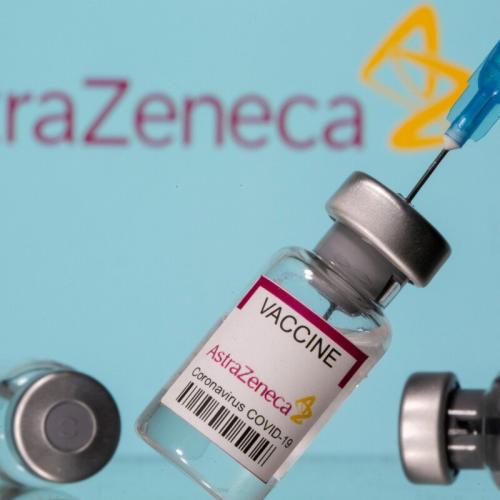
For years, the Gates Foundation has been steered by an unusually small board of trustees, made up of Bill, his estranged wife, Melinda, and the billionaire investor Warren Buffett. The larger the foundation became, the less anyone seemed willing to ask tough questions about its secretive management structure or its penchant for giving money to lucrative pharmaceutical and credit card companies such as Mastercard, despite the fact that giving away billions to wealthy corporations set an unusual and troubling precedent in the philanthropic sector. Billionaires who make their fortunes through corporate practices that undercut workers and deepen inequality — like corporate tax avoidance, insufficient sick pay and the immoral gap in pay between executives and low-paid workers — are not the solution to problems they generate. Asking Bill Gates to fix inequality is like asking an arsonist to hose down your house after he just set it on fire. In April last year, the University of Oxford was reportedly considering offering a Covid-19 vaccine developed by its scientists on a nonexclusive basis. But then, Kaiser Health News reported, “Oxford — urged on by the Bill & Melinda Gates Foundation — reversed course. It signed an exclusive vaccine deal with AstraZeneca that gave the pharmaceutical giant sole rights and no guarantee of low prices.” This dealmaking .. seemed to conflict with the Gates Foundation’s stated mission to improve global access to medicines, but it’s not surprising.
Note: Read more about the Gates Foundation's startling degree of media influence during the pandemic. For more along these lines, see concise summaries of deeply revealing news articles on corporate corruption and the coronavirus vaccine from reliable major media sources.
A video showing a mobile device snapping infrared images of an iPhone user is circulating around the internet. In the Tik Tok shared by user Brie Thomason, a digital camera using an infrared lens is seen filming an iPhone user observing their home screen. As the iPhone user stares blatantly at the device, Thomason’s digital camera captures the iPhone snapping multiple infrared images every 5-10 seconds. While this discovery may cause some users to panic, Apple claims this is actually just an aspect of the iPhone that allows users to control their face ID and Animoji (the animated emoji function). According to Apple, this feature was first debuted as the iPhone X’s most groundbreaking function; since it is not even discernible at first glance, even though it literally stares you in the face. The company calls this feature: the new TrueDepth IR camera. This camera, housed in the black notch at the top of the display, includes a number of high-tech components such as a “flood illuminator,” infrared (IR) camera, and an infrared emitter. Officials say as an iPhone is used, the latter emits 30,000 infrared dots in a known pattern when a face is detected, enabling the iPhone X to generate a 3D map of a user’s face. According to the team, this TrueDepth IR camera can also do this fast enough to support the creation of 3D motion data as well. So, yes, your iPhone is essentially taking “invisible” photos of you, but not for the reasons you would think.
Note: For more along these lines, see concise summaries of deeply revealing news articles on corporate corruption and the disappearance of privacy from reliable major media sources.
Research Medical's owner, HCA Healthcare Inc., is a profitable, publicly traded network of 185 hospitals. Even in the year of Covid-19, 2020, the company generated $51.5 billion in revenue and increased its pretax earnings by 3.6 percent. That performance helped boost the total compensation HCA's chief executive, Samuel N. Hazen, received last year to $30.4 million, a 13 percent rise from 2019. The total worth of his compensation package equaled 556 times the compensation received by the median employee at HCA — $54,651. The figures highlight the growing CEO pay gap, a problem among many public companies according to some investors and workers and even a few CEOs. In 2019, for example, the average pay ratio among 350 large American companies was 320-to-1, according to research by the Economic Policy Institute. In 1989, the average was 61-to-1. Because [Jamelle] Brown, [an] emergency department worker, makes even less than the median, Hazen got roughly 1,000 times Brown's pay. Brown says he lives with his sister because he doesn't earn enough from his job at Research Medical to pay for his own apartment. HCA isn't alone in paying its chief executive vastly more than what rank-and-file workers earn. Acuity Brands, an industrial technology company, paid its CEO, Neil M. Ashe, $21 million last year, or 2,316 times the median employee's pay. Starbucks ... paid its CEO, Kevin Johnson, $14.7 million last year. That was 1,211 times the pay of its median employee.
Note: For more along these lines, see concise summaries of deeply revealing news articles on income inequality from reliable major media sources.
With few exceptions, big businesses are having a very different year from most of the country. Between April and September, one of the most tumultuous economic stretches in modern history, 45 of the 50 most valuable publicly traded U.S. companies turned a profit. Despite their success, at least 27 of the 50 largest firms held layoffs this year, collectively cutting more than 100,000 workers. Corporate leaders are touting their success and casting themselves as leaders on the road to economic recovery. Many of their firms have put Americans out of work and used their profits to increase the wealth of shareholders. 21 big firms that were profitable during the pandemic laid off workers anyway. Berkshire Hathaway raked in profits of $56 billion during the first six months of the pandemic while one of its subsidiary companies laid off more than 13,000 workers. Salesforce, Cisco Systems and PayPal cut staff even after their chief executives vowed not to do so. Companies sent thousands of employees packing while sending billions of dollars to shareholders. Walmart, whose CEO spent the past year championing the idea that businesses “should not just serve shareholders,” nonetheless distributed more than $10 billion to its investors during the pandemic while laying off 1,200 corporate office employees. Economists estimate at least 100,000 small businesses permanently closed in the first two months of the pandemic alone.
Note: For more along these lines, see concise summaries of deeply revealing news articles on corporate corruption and the coronavirus from reliable major media sources.
Netflixs brilliant new 90-minute docu-drama, The Social Dilemma ... might be the most important watch of recent years. The film, which debuted at Sundance Film Festival in January, takes a premise thats unlikely to set the world alight ... ie that Facebook, Twitter, Instagram et al arent exactly creating a utopia. Its masterstroke is in recruiting the very Silicon Valley insiders that built these platforms to explain their terrifying pitfalls which theyve realised belatedly. You dont get a much clearer statement of social medias dangers than an ex-Facebook executives claim that: In the shortest time horizon Im most worried about civil war. The commonly held belief that social media companies sell users data is quickly cast aside the data is actually used to create a sophisticated psychological profile of you. What theyre selling is their ability to manipulate you, or as one interviewee puts it: Its the gradual, slight, imperceptible change in your own behaviour and perception. Its the only thing for them to make money from: changing what you do, how you think, who you are. Despite it being public knowledge that Vote Leave and Trumps 2016 election campaign harvested voters Facebook data on a gigantic scale, The Social Dilemma still manages to find fresh and vital tales of how these platforms destabilise modern politics. Russias Facebook hack to influence the 2016 US election? The Russians didnt hack Facebook. They used the tools that Facebook made for legitimate advertisers, laments one of the companys ex-investors.
Note: For more along these lines, see concise summaries of deeply revealing news articles on corporate corruption and media manipulation from reliable sources.
The maker of a drug shown to shorten recovery time for severely ill COVID-19 patients says it will charge $2,340 for a typical treatment course for people covered by government health programs in the United States and other developed countries. Gilead Sciences announced the price Monday for remdesivir, and said the price would be $3,120 for patients with private insurance. The amount that patients pay out of pocket depends on insurance, income and other factors. The price was swiftly criticized; a consumer group called it an outrage because of the amount taxpayers invested toward the drug's development. In 127 poor or middle-income countries, Gilead is allowing generic makers to supply the drug; two countries are doing that for around $600 per treatment course. The drug, given through an IV, interferes with the coronaviruss ability to copy its genetic material. In a U.S. government-led study, remdesivir shortened recovery time by 31% 11 days on average versus 15 days for those given just usual care. Peter Maybarduk, a lawyer at the consumer group Public Citizen, called the price an outrage. Remdesivir should be in the public domain because the drug received at least $70 million in public funding toward its development, he said. The price puts to rest any notion that drug companies will do the right thing because it is a pandemic, Dr. Peter Bach, a health policy expert ... said. The price might have been fine if the company had demonstrated that the treatment saved lives. It didnt.
Note: The March coronavirus package passed in the U.S. "not only omitted language that would have limited drug makers intellectual property rights, it specifically prohibited the federal government from taking any action if it has concerns that the treatments or vaccines developed with public funds are priced too high." While many suffer economically from the virus, big Pharma is raking in big bucks. For more along these lines, see concise summaries of deeply revealing news articles on Big Pharma corruption and the coronavirus from reliable major media sources.
The global insulin market is dominated by three companies: Eli Lilly, the French company Sanofi and the Danish firm Novo Nordisk. All three have raised list prices to similar levels. According to IBM Watson Health data, Sanofis popular insulin brand Lantus was $35 a vial when it was introduced in 2001; its now $270. Novo Nordisks Novolog was priced at $40 in 2001, and as of July 2018, its $289. The companies appear to have increased [prices] in lockstep over a number of years, prompting allegations of price fixing. All three companies denied these charges. (In 2010, Mexico fined Eli Lilly and three Mexican companies for price collusion on insulin, an allegation Eli Lilly also denied.) In the United States, a federal prosecutor and at least five state attorneys general are currently investigating the companies pricing practices. There is also another, less known corporate entity in the mix: pharmacy benefit managers (PBMs), which include Express Scripts, OptumRx and CVS Health; all are now named in lawsuits on high insulin prices. These corporate entities are powerful special interests. In 2017, the pharmaceutical and health product industry ... spent nearly $280 million on lobbying, the biggest spender by far of 20 top industries, according to the Center for Responsive Politics. The industry also has a revolving door to government. Alex Azar, the head of the Department of Health and Human Services, was the president of Eli Lillys U.S. division until 2017.
Note: For more along these lines, see concise summaries of deeply revealing news articles on pharmaceutical industry corruption from reliable major media sources.
Powerful institutions are using covert tactics to shape how they are portrayed online. One method involves deploying fake “sockpuppet” accounts to edit Wikipedia pages, enabling interested parties to quietly remove criticism or rewrite how organizations are described on one of the world’s most widely used sources of information. A British investigation found that such tactics were used to remove critical information about AGRA (formerly the Alliance for a Green Revolution in Africa), a controversial initiative backed by the Gates Foundation that seeks to industrialize African food and farming systems. The analysis identified a “network of 26 ‘sockpuppets’ – multiple accounts orchestrated by a single person – that was eventually banned from Wikipedia under suspicion of paid editing,” [investigator Claire] Wilmot wrote. The findings highlight growing concerns about attempts by governments, corporations and philanthropies to influence widely used online information sources that increasingly feed search engines and artificial intelligence systems that summarize information for the public. “Because it’s widely used by search engines and AI systems, efforts to manipulate it can have far-reaching effects,” Wilmot said. Wilmot warned that the network uncovered in the probe likely represents only a small part of broader efforts by powerful institutions to sanitize their online reputations.
Note: Instead of reducing world hunger, the Green Revolution’s legacy has led to soil degradation, inequality, mass farmer suicides, and restrictive seed laws that push farmers into debt and dependency on patented GMO seeds and fossil-fuel fertilizers. Read more about the grave human health and environmental outcomes of the Gates-funded Green Revolution. For more along these lines, read our concise summaries of news articles on food system corruption and media manipulation.
In 2000 a study was published in the journal Regulatory Toxicology and Pharmacology that deemed the active ingredient in Roundup (glyphosate) was safe and not a human health risk. Since then, that study has been cited consistently as proof of Roundup’s safety. Numerous other studies have shown that glyphosate could cause cancer and that the inert ingredients that are part of the patented Roundup formulation increase the toxicity of glyphosate. Further, the practice of using Roundup as a desiccant on small grain crops (oats, wheat and barley) prior to harvest, puts Roundup directly on grain that enters the human food chain. Since acquiring Monsanto in 2018, Bayer has paid out about $11 billion to settle almost 100,000 cancer-related lawsuits, with approximately 61,000 still pending. In December of 2025, another blow to the claimed safety of Roundup when the Regulatory Toxicology and Pharmacology journal withdrew the 2000 article that had touted Roundup’s safety. While the study claimed to be independent and peer reviewed, it has come to light that Monsanto’s scientists played a significant role in conceiving and writing the article. Oops. For decades, Roundup has been sold as an effective herbicide, one that was safe to humans and the environment and without it, “consequences would be dire”. Companies like Bayer ... claim to produce safe products that help farmers thrive— real independent research refutes that.
Note: In addition to increasing cancer risk by 41%, glyphosate is linked to severe depression and cognitive decline. Our latest Substack, "The Pesticide Crisis Reveals The Dark Side of Science. We Have The Solutions to Regenerate," uncovers the scope of Monsanto's media propaganda machine and the widespread conspiracy to poison our food, air, and along with the powerful remedies and solutions to this crisis. For more along these lines, read our concise summaries of news articles on corruption in science and toxic chemicals.
Chatbots and AI-generated search summaries – which are rapidly transforming the way people get their information – both use Wikipedia as a key source. Now, we can reveal Wikipedia has been subject to shady, paid-for edits ordered by partners at an elite London PR firm with links to Downing Street. And the clients who benefitted from this “wikilaundering” are some of the world’s richest and most powerful people. The firm in question is Portland Communications. And it has been busted once already for this practice. After the firm was exposed, former employees told us, it simply started hiring middlemen instead. As one of them put it: “No one said, ‘We should stop doing this.’ The question was how we could keep doing it without getting caught.” Portland’s subcontractors have ... obscured mentions of a major terrorist-financing case involving Qatari businessmen; scrubbed evidence that a billion-dollar Gates-funded project failed in its mission; and promoted one side of Libya’s post-Gaddafi government over the other. Often, however, their changes were more subtle: burying bad press under descriptions of a client’s philanthropic work or swapping out critical news references with something more positive. “Small Wikipedia edits punch above their weight,” explained Alberto Fittarelli ... at the University of Toronto’s Citizen Lab. “Small, incremental changes are likely to stick for longer. These kinds of edits make narratives seem credible precisely because they are hardly noticeable. Once that enters the information stream, it becomes really hard to claw it back.”
Note: Read how Wikipedia is systematically manipulated by the military-intelligence complex. The CIA, FBI, and the Pentagon has secretly edited entries in Wikipedia, including removing references to CIA illegal rendition and torture, downplaying US involvement in Iraqi civilian deaths, and rewriting the definition of “terrorism” to expand its political use. For more along these lines, read our concise summaries of news articles on media manipulation.
The director of the Food and Drug Administration’s vaccine division told agency staff in a memo that an internal review found that at least 10 children died “after and because of receiving” the Covid vaccine. The 3,000-word memo, obtained by NBC News, was written by Dr. Vinay Prasad, director of the FDA’s Center for Biologics Evaluation and Research. In it, Prasad claims that agency staff determined that “no fewer than 10” of 96 child deaths reported to the Vaccine Adverse Event Reporting System, or VAERS, between 2021 and 2024 were “related” to Covid vaccination. He said the true numbers could be higher, accusing the agency of ignoring the safety concerns for years. “This is a profound revelation,” Prasad wrote in the memo. “For the first time, the U.S. FDA will acknowledge that COVID-19 vaccines have killed American children.” Prasad suggests that the child deaths were tied to myocarditis, an inflammation of the heart muscle. The memo uses [characterized] Covid vaccine requirements for schools and employers as “coercive,” calling past agency decisions “dishonest,” and arguing that vaccine regulation “may have harmed more children than we saved.” At one point, Prasad instructs staff who disagree with his conclusions to resign. He also claimed the Biden administration dismissed early safety concerns, and criticized former Centers for Disease Control and Prevention Director Rochelle Walensky for what he described as “dishonest and manipulative” public comments.
Note: Children were never at serious risk from the COVID virus. The death of even one child from this vaccine is unacceptable. Read our comprehensive, in-depth, and nuanced investigation into COVID vaccine injuries and deaths.
A Campbell’s Soup Company executive has been put on temporary leave after he allegedly referred to the firm’s offerings as “shit for fucking poor people” – a remark purportedly caught on an audio recording and attributed to him in a former employee’s wrongful termination lawsuit. The lawsuit was filed last Thursday in Wayne county circuit court in Michigan by Robert Garza, who had joined Campbell’s New Jersey headquarters remotely in September 2024 as a security analyst. Garza alleges he was fired in January after he raised concerns about comments made by Martin Bally, Campbell’s vice-president of information technology – including referring to one of the company’s ingredients as “bioengineered meat” while going off on a racist tirade. In audio recordings captured by Garza after sensing that “something wasn’t right,” which were later reviewed by the Michigan news outlet WDIV, a voice can be heard saying: “We have shit for fucking poor people.” The voice adds: “Who buys our shit? I don’t buy Campbell’s products barely any more. It’s not healthy now that I know what the fuck’s in it ... bioengineered meat. “I don’t wanna eat a piece of chicken that came from a 3D printer.” Garza says he felt “pure disgust” after the meeting but kept the recording private until January, when he reported Bally’s behaviour to supervisor JP Aupperle, according to WDIV. Garza said he was dismissed from Campbell’s 20 days later and without any prior disciplinary action.
Note: Read our Substack article on how the US government turns a blind eye to the corporate cartels fueling the chronic health crisis. For more along these lines, read our concise summaries of news articles on health and food system corruption.
Jeffrey Epstein ... helped JPMorgan orchestrate an important acquisition. He introduced executives to men who would become lucrative clients, like the Google co-founder Sergey Brin, and to global leaders, like Prime Minister Benjamin Netanyahu of Israel. At Epstein’s behest, JPMorgan set up accounts — into which he routinely transferred huge sums — for young women who turned out to be victims of his sex-trafficking operations. It wired his funds overseas. It even paid him millions of dollars. But in the summer of 2019, Epstein was arrested. Federal prosecutors charged him with sex trafficking. JPMorgan went into damage-control mode. It filed a report with federal regulators that retroactively flagged as suspicious some 4,700 Epstein transactions — totaling more than $1.1 billion and including hundreds of millions of dollars in payments to Russian banks and young Eastern European women who were brought to the United States. Banks are required to file such reports in real time to alert law enforcement to things like money laundering, sex trafficking and drug dealing. Doing it after the fact might have provided JPMorgan with legal cover, but it did nothing to help identify Epstein’s crimes as they were happening. The fallout for JPMorgan has been limited. In 2023, it paid $290 million to settle a lawsuit brought by roughly 200 of Epstein’s victims and an additional $75 million to resolve related litigation brought by the U.S. Virgin Islands.
Note: This article is also available here. According to a Guardian article, "Epstein introduced [JPMorgan] bank executives to some figures who would become clients, including the Google co-founder Sergey Brin, and to global leaders, such as the Israeli prime minister, Benjamin Netanyahu, Bill Gates, Elon Musk and the Emirati billionaire Sultan Ahmed bin Sulayem." Read our comprehensive Substack investigation covering the connection between Epstein’s child sex trafficking ring and intelligence agency sexual blackmail operations.
It’s no secret that cable news networks have partisan reputations. But new research shows the divide extends beyond which party a network appears to support. Over the past decade, these networks have increasingly focused on criticizing the opposing political party, a tactic researchers say is less about informing viewers and more about “selling anger.” “These networks are more interested in talking about the opposing political party rather than their own candidates. This was not the case 15, 20 years ago,” said Diego Garcia, the ... co-author of the working paper. The findings show that politics dominates cable news, accounting for about 60% of all named individuals mentioned—rising to over 75% during election years. But more revealing is who gets talked about: MSNBC spends more time discussing Republicans than Democrats, while Fox News focuses more heavily on Democrats. In 2024, Fox covered Democrats 60% of the time, with MSNBC showing the reverse. Garcia speculates that cable networks began to test different kinds of content when social media became widespread in the mid-2010s, and discovered that outrage boosts viewership. “I think Fox was the first one to figure this out, and they started pushing this negative rhetoric in their news,” he said. “They’re actually now the No. 1 cable news channel in the U.S. by far.” Fox News now commands over 60% of the cable news audience—a dramatic jump from a more evenly split landscape a decade ago.
Note: Watch our 31-min video titled, "How to Transform Media Polarization, One Echo Chamber At A Time." For more along these lines, read our concise summaries of news articles on media manipulation.
Digital technology was sold as a liberating tool that could free individuals from state power. Yet the state security apparatus always had a different view. The Prism leaks by whistleblower Edward Snowden in 2013 revealed a deep and almost unconditional cooperation between Silicon Valley firms and security apparatuses of the state such as the National Security Agency (NSA). People realized that basically any message exchanged via Big Tech firms including Google, Facebook, Microsoft, Apple, etc. could be easily spied upon with direct backdoor access: a form of mass surveillance with few precedents ... especially in nominally democratic states. The leaks prompted outrage, but eventually most people preferred to look away. The most extreme case is the surveillance and intelligence firm Palantir. Its service is fundamentally to provide a more sophisticated version of the mass surveillance that the Snowden leaks revealed. In particular, it endeavors to support the military and police as they aim to identify and track various targets — sometimes literal human targets. Palantir is a company whose very business is to support the security state in its most brutal manifestations: in military operations that lead to massive loss of life, including of civilians, and in brutal immigration enforcement [in] the United States. Unfortunately, Palantir is but one part of a much broader military-information complex, which is becoming the axis of the new Big Tech Deep State.
Note: For more along these lines, read our concise summaries of news articles on corruption in the intelligence community and in Big Tech.
Investigative journalist Will Potter ... turns his lens on one of the most secretive and violent industries in the United States: factory farming. Little Red Barns is the product of a decade-long investigation into the hidden world of Concentrated Animal Feeding Operations — massive industrial sites where most meat, dairy, and eggs in the U.S. are produced. As a new wave of investigators began exposing the cruelty and pollution inside these facilities ... the industry fought back. Agricultural trade groups quietly drafted and lobbied for so-called “ag-gag” laws: legislation that makes it a crime for anyone, including journalists, to document what happens behind closed doors. Some ag-gag bills were literally written by the industry. In Idaho, for example, Mercy for Animals exposed Bettencourt Dairy, the state’s largest dairy farm and a major supplier for Burger King and Kraft. Workers were shown dragging cows with chains around their necks and repeatedly punching them in the face. Footage was later released that showed workers sexually abusing animals. Publicly, Bettencourt said the farm has “zero tolerance for animal abuse in our dairies.” Privately, he and the state’s $2.5 billion dairy industry lobbied for a new ag-gag law that prohibited “audio or video recording” on an agricultural facility. It also made it illegal to “obtain records” without the farm owner’s consent. Dan Steenson, a registered lobbyist for the Idaho Dairymen’s Association, had drafted the ag-gag bill.
Note: In 2019, investigative reporting and court records showed that the FBI collaborated with the factory farming industry to place animal rights activists under weapons-of-mass-destruction (WMD) investigative frameworks, exploring criminal charges—including attempted use of a WMD—that could carry life sentences despite the absence of conventional weapons or mass casualties. For more along these lines, read our concise summaries of news articles on factory farming.
If economic inequality increases within a country, the risk of civil war breaking out grows. This is the finding from a study by the Chair of Economic History at the University of Tübingen. The study has been published in the Review of Income and Wealth. The calculations revealed a statistically significant connection between unequal distribution of income and the outbreak of civil wars. The results can be verified using historical events: for example, land was extremely unequally distributed in Russia before the October revolution of 1917—and this critically contributed to the outbreak of revolution and civil war, a marker that was also identified by the new benchmark with a correspondingly high probability. The new benchmark also makes it possible to predict the risk of civil war today: "In the U.S. the inequality in income distribution has risen sharply in the past 30 years. Accordingly, the risk of a civil war in the U.S. has risen drastically from 10% to 21%," says Baten. In Great Britain, China, India and Russia too, inequality has risen greatly in the same period. "We've checked what influence other variables had on the outbreak of civil wars," says Laura Radatz, co-author of the study. "For instance, the size of a country and its population naturally increase the probability that a civil war will break out somewhere in this country." The amount of economic growth in a country does not measurably influence the risk of a civil war, according to the study.
Note: For more along these lines, read our concise summaries of news articles on financial inequality.
The first White House report of the Make America Healthy Again (MAHA) Commission ... was published yesterday. The Commission is chaired by [Robert F.] Kennedy, now Secretary of the Department of Health and Human Services, and features other prominent administration officials including USDA Secretary Brooke Rollins, NIH Director Jay Bhattacharya, and FDA Commissioner Marty Makary. The report outlines the massive increase in youth health problems in the country that spends more per capita on healthcare than any nation in history. Many of these diseases are metabolic: obesity, diabetes, and Non-Alcoholic Fatty Liver Disease. Others involve the immune system, such as asthma, allergies, and autoimmune disorders. Still others are psychiatric, such as depression and anxiety. Perhaps the most baffling development is the massive spike in autism spectrum disorder. This once-rare condition reportedly affects one in 31 American children. The MAHA Commission focuses on four key drivers of such change: food, exposure to environmental chemicals, the pervasive use of technology and a corresponding decline in physical exercise, and the overuse of medication that sometimes creates more problems than it solves. The Commission’s first report ... does not call for a ban on specific pesticides or vaccines. What it does manage, however, is to reframe the debate over public health and set a bold agenda to reform the system.
Note: For more along these lines, read our concise summaries of news articles on health and Big Pharma profiteering.
Amber Scorah knows only too well that powerful stories can change society—and that powerful organizations will try to undermine those who tell them. While working at a media outlet that connects whistleblowers with journalists, she noticed parallels in the coercive tactics used by groups trying to suppress information. “There is a sort of playbook that powerful entities seem to use over and over again,” she says. “You expose something about the powerful, they try to discredit you, people in your community may ostracize you.” In September 2024, Scorah cofounded Psst, a nonprofit that helps people in the tech industry or the government share information of public interest with extra protections—with lots of options for specifying how the information gets used and how anonymous a person stays. Psst’s main offering is a “digital safe”—which users access through an anonymous end-to-end encrypted text box hosted on Psst.org, where they can enter a description of their concerns. What makes Psst unique is something it calls its “information escrow” system—users have the option to keep their submission private until someone else shares similar concerns about the same company or organization. Combining reports from multiple sources defends against some of the isolating effects of whistleblowing and makes it harder for companies to write off a story as the grievance of a disgruntled employee, says Psst cofounder Jennifer Gibson.
Note: For more along these lines, read our concise summaries of news articles on Big Tech and media manipulation.
Important Note: Explore our full index to revealing excerpts of key major media news articles on several dozen engaging topics. And don't miss amazing excerpts from 20 of the most revealing news articles ever published.