
















Corporate Corruption News Articles
Below are key excerpts of revealing news articles on corporate corruption from reliable news media sources. If any link fails to function, a paywall blocks full access, or the article is no longer available, try these digital tools.

What if I told you one in 50 people who took a new medication had a “medically attended adverse event” and the manufacturer refused to disclose what exactly the complication was — would you take it? And what if the theoretical benefit was only transient, lasting about three months, after which your susceptibility goes back to baseline? And what if we told you the Food and Drug Administration cleared it without any human-outcomes data. That’s what we know about the new COVID vaccine the Biden administration is firmly recommending. COVID vaccines are very different from flu vaccines. COVID vaccines have higher complication rates, including severe and life-threatening cardiac reactions. Flu shots have a 50-plus-year safety record whereas COVID vaccines have been associated with a serious adverse event rate of one in 5,000 doses, according to a German study by the Paul-Ehrlich-Institut. Another study, published last year in the medical journal Vaccine, estimated the rate of serious adverse events to be as high as one in 556 COVID vaccine recipients. And for young people, the incidence of myocarditis is six to 28 times higher after the vaccine than after infection, even for females, according to a 2022 JAMA Cardiology study. That’s one of the reasons a study that we and several national colleagues published last year found that college booster mandates appear to have resulted in a net public health harm.
Note: The above was written by Marty Makary, MD, a professor at the Johns Hopkins School of Medicine. Anecdotals is a powerful documentary that follows the lives of many people who stepped up to get vaccinated for themselves or the greater good, yet whose lives changed drastically as a result. Instead of having their stories of vaccine injuries heard and seen, they were discredited and abandoned by the medical system and our media systems.
A new peer-reviewed study released by a group of scientists in Taiwan has revealed an astonishingly strong link between severe depression, cognitive decline and exposure to the world’s most used herbicide, glyphosate. The study was fully published on Aug. 22 in the highly respected Elsevier Journal, Environmental Research. It was met with silence by the manufacturers of glyphosate-based herbicides such as Bayer/Monsanto, who produce the infamous weedkiller Roundup. The study authors stated that they: “Conducted analyses on existing data collected from 1532 adults of the 2013–2014 U.S. National Health and Nutrition Examination Survey (NHANES) to explore the possible relationship between glyphosate exposure and cognitive function, depressive symptoms, disability, and neurological medical conditions.” The proportion of individuals with detectable levels of glyphosate was 80.4%. The scientists concluded: “Our study provides important evidence of an association between urinary glyphosate levels and adverse neurological outcomes in a representative cohort of U.S. adult population. “Specifically, we observed lower cognitive function scores, greater odds of severe depressive symptoms, and increased risk of serious hearing difficulty in individuals with higher glyphosate exposure.” Some other recent independent studies ... suggest that both glyphosate alone and glyphosate-based herbicides such as Roundup are neurotoxins.
Note: A 2019 study found that glyphosate increases cancer risk by 41%. For more along these lines, see concise summaries of deeply revealing news articles on food system corruption and health from reliable major media sources.
Funding for the Department of Defense and related work on nuclear weapons at the Department of Energy will reach more than $850 billion in Fiscal Year 2023, far higher than spending at the height of the Cold War or the peak years of the Korean and Vietnam conflicts. While advocates of spending these enormous sums often argue that the money is needed to "support the troops," more than half of the Pentagon's yearly budget goes to private contractors, many of whom are making hefty profits at taxpayer expense while producing flawed products at exorbitant prices. One telling example of how these companies waste taxpayer dollars is how much they pay their top executives. In 2021 ... the CEOs of the top five contractors received compensation ranging from $18 million to $23 million each, including James Taiclet of Lockheed Martin, $18.1 million; David Calhoun of Boeing, $21.1 million; Gregory Hayes of Raytheon, $21.8 million; Phebe Novakovic of General Dynamics, $23.5 million; and Kathy Warden of Northrop Grumman, $19.9 million. Since these firms receive a large share of their revenue from U.S. government contracts, much of this excessive executive compensation is essentially subsidized by the taxpayers. Defense executives wouldn't be able to earn multi-million dollar salaries if their companies weren't grabbing billions in Pentagon contract awards. In addition to campaign contributions, the industry spent over $100 million on lobbying in just the first three quarters of 2022.
Note: For more along these lines, see concise summaries of deeply revealing news articles on corruption in the military and in the corporate world from reliable major media sources.
The Biden administration took a public stand last year against the abuse of spyware to target human rights activists, dissidents and journalists: It blacklisted the most notorious maker of the hacking tools, the Israeli firm NSO Group. But the global industry for commercial spyware — which allows governments to invade mobile phones and vacuum up data — continues to boom. Even the U.S. government is using it. The Drug Enforcement Administration is secretly deploying spyware from a different Israeli firm, according to five people familiar with the agency’s operations, in the first confirmed use of commercial spyware by the federal government. The most sophisticated spyware tools — like NSO’s Pegasus — have “zero-click” technology, meaning they can stealthily and remotely extract everything from a target’s mobile phone, without the user having to click on a malicious link to give Pegasus remote access. They can also turn the mobile phone into a tracking and secret recording device, allowing the phone to spy on its owner. But hacking tools without zero-click capability, which are considerably cheaper, also have a significant market. Commercial spyware has been used by intelligence services and police forces to hack phones used by drug networks and terrorist groups. But it has also been abused by numerous authoritarian regimes and democracies to spy on political opponents and journalists. This has led governments to a sometimes tortured rationale for their use.
Note: Read about how NSO Group spyware was used against journalists and activists by the Mexican government. For more along these lines, see concise summaries of deeply revealing news articles on the disappearance of privacy from reliable major media sources.
It's estimated that more than 107,000 people in the United States died due to opioid overdoses in 2021. Washington Post journalist Scott Higham notes it's "the equivalent of a 737 Boeing crashing and burning and killing everybody on board every single day." In the new book, American Cartel, Higham and co-author Sari Horwitz make the case that the pharmaceutical industry operated like a drug cartel, with manufacturers at the top; wholesalers in the middle; and pharmacies at the level of "street dealers." The companies collaborated with each other — and with lawyers and lobbyists — to create legislation that protected their industry, even as they competed for market share. "It really is the companies that run the show," Higham says. "People were dying by the thousands while these companies were lobbying members of Congress ... to pass legislation and to lobby members of the Department of Justice and try to slow down the DEA enforcement efforts." Big pharma fought to create legislation that would limit the DEA's ability to go after drug wholesalers. The efforts were effective; more than 100 billion pills were manufactured, distributed and dispensed between 2006 and 2014. Meanwhile, both federal and state DEA agents are frustrated by the ways in which their enforcement efforts have been curtailed. Right now there are 40,000 Americans who are in jail on marijuana charges. And not one executive of a Fortune 500 company involved in the opioid trade has been charged with a crime.
Note: For more along these lines, see concise summaries of deeply revealing news articles on corruption in government and in the pharmaceutical industry from reliable major media sources.
The new documentary-exposé Victoria’s Secret: Angels and Demons [reveals] that the multibillion-dollar lingerie chain that marketed its models as the last word in hotness and glamour was a ruthless capitalist enterprise dogged by accusations of harassment, corruption and abuse. We meet old friends from the modern sexual abuse and violence documentary circuit. Jeffrey Epstein and Ghislaine Maxwell, of course, but also Jean-Luc Brunel, whose predations against the girls and women he met as the head of Karin Models Agency and MC2 Model Management (financed, would you believe, by Epstein) were recently outlined in Sky documentary Scouting for Girls – alongside those of fellow agents John Casablancas, Claude Haddad and Gérald Marie, the last of whom vehemently denies all sexual abuse allegations against him from several women. The new guy in the mix is Leslie Wexner, owner of the eponymous lingerie firm. He became acquainted with Epstein in the 1980s when Wexner needed an entré into New York society. It was Wexner who sold him the townhouse that would become infamous as the spycam site of his abusive operations, and who sold him the private jet that would become known as the “Lolita Express” as it ferried underage girls wherever Epstein and his fellow predators needed them to go. Wexner gave Epstein power of attorney over his entire estate – worth hundreds of millions of dollars – and didn’t revoke it until 2007, well after Epstein’s first arrest in 2006.
Note: Watch an eye-opening video on the top 10 shocking reveals of this documentary. For more along these lines, see concise summaries of deeply revealing news articles on Jeffrey Epstein's child sex ring from reliable major media sources.
Why have so many smart, well-trained doctors stood by as American healthcare descended into a state of profound dysfunction? The answer lies in the gradual, nearly invisible commercial takeover of the medical “knowledge” that doctors are trained to trust. In 1981, President Ronald Reagan slashed government support of university-based medical research. Following the 1980 passage of the University and Small Business Patent Procedures Act, nonprofit institutions and their researchers were allowed to benefit financially from the discoveries made while conducting federally funded research. Over the past few decades, the drug companies have taken over most of our clinical research. In 1991, academic medical centers (AMCs)—hospitals that train doctors and conduct medical research—received 80 percent of the money that industry was spending to fund clinical trials. But by 2004, the percentage of commercially funded clinical trials conducted by AMCs had fallen from 80 to just 26 percent. That ... allowed the commercial funder to own, and thus control, the data from jointly conducted research. Unbeknownst to almost all doctors, peer reviewers are not granted access to the underlying data that serves as the basis for the reported findings. The drug companies own that data and keep it confidential. Reviewers must rely on brief data summaries. Peer reviewers at even the most prestigious medical journals cannot possibly attest to the accuracy and completeness of the articles they review.
Note: For more along these lines, see concise summaries of deeply revealing news articles on corruption in science and Big Pharma profiteering from reliable major media sources.
On September 19, 2019, House Speaker Nancy Pelosi introduced the Elijah Cummings Lower Drug Costs Now Act. The bill ... would allow the federal government to negotiate drug prices on behalf of Medicare, a right assumed by the governments of every other major economy. Polls showed support ranging from 80 to an eye-popping 90-plus percent. H.R. 3 was delivered stillborn into Mitch McConnell’s Senate in November of 2019. Two years later, when Joe Biden released the massive social-spending and climate-change bill dubbed Build Back Better, H.R. 3’s reforms were nowhere to be found. And at every level of government, Pharma’s endless river of money continues to flow, the widest, steadiest current of lobbying largesse the capitol has ever known. In 2021, the industry reported spending $124 million on a fleet of 846 lobbyists, roughly two for every member of Congress. Sixty-five percent were former government employees. Pharmaceutical manufacturers are part of a larger coalition that includes the insurance, medical-device, and hospital industries. Its combined resources flow downstream through dozens of lobbying firms, communications shops, and front groups. “If a freshman Democrat so much as signs a letter related to drug prices, the lobby hammers them with phone calls and meeting requests, completely locking up the calendar,” says Alex Lawson, executive director of Social Security Works. “The calls come in from ex-Democratic officials and staffers, so they have to take the meetings.”
Note: For more along these lines, see concise summaries of deeply revealing news articles on government corruption and Big Pharma profiteering from reliable major media sources.
Last year, racing to develop a vaccine in record time, Pfizer made a big decision: Unlike several rival manufacturers, which vowed to forgo profits on their shots during the Covid-19 pandemic, Pfizer planned to profit on its vaccine. On Tuesday, the company announced just how much money the shot is generating. The vaccine brought in $3.5 billion in revenue in the first three months of this year, nearly a quarter of its total revenue, Pfizer reported. The vaccine was, far and away, Pfizer's biggest source of revenue. The company did not disclose the profits it derived from the vaccine, but it reiterated its previous prediction that its profit margins on the vaccine would be in the high 20 percent range. That would translate into roughly $900 million in pretax vaccine profits in the first quarter. The company's vaccine is disproportionately reaching the world's rich – an outcome, so far at least, at odds with its chief executive's pledge to ensure that poorer countries "have the same access as the rest of the world" to a vaccine that is highly effective at preventing Covid-19. As of mid-April, wealthy countries had secured more than 87 percent of the more than 700 million doses of Covid-19 vaccines dispensed worldwide, while poor countries had received only 0.2 percent. Pfizer has kept the profitability of its vaccine sales opaque. The United States, for example, is paying $19.50 for each Pfizer dose. Israel agreed to pay Pfizer about $30 per dose.
Note: If Pfizer is truly concerned about global health, why are they reaping such huge profits when other companies were willing to forgo profits. And why are they not helping the economically disadvantaged countries? For more along these lines, see concise summaries of deeply revealing news articles on coronavirus vaccines and Big Pharma profiteering from reliable major media sources.
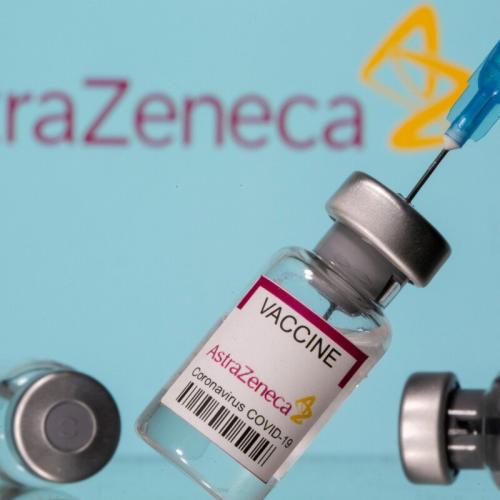
AstraZeneca may have included "outdated information" in touting the effectiveness of its COVID-19 vaccine in a U.S. study, federal health officials said Tuesday in an unusual public rift that could further erode confidence in the shot. In an extraordinary rebuke, just hours after AstraZeneca on Monday announced its vaccine worked well in the U.S. study, an independent panel that oversees the study scolded the company for cherry-picking data, according to a senior administration official. The panel wrote to AstraZeneca and U.S. health leaders that it was concerned the company chose to use data that was outdated and potentially misleading instead of the most recent and complete findings. The NIH's Dr. Anthony Fauci told ABC's "Good Morning America" that the incident "really is what you call an unforced error" and that he expects the discrepancy to be straightened out. But that nitty-gritty seldom is seen by the public, something now exposed by the extraordinary microscope being applied to development of the world's COVID-19 vaccines. The vaccine is used widely in Britain, across the European continent and in other countries, but its rollout was troubled by inconsistent study reports about its effectiveness, and then last week a scare about blood clots that had some countries temporarily pausing inoculations. Company executives refused repeated requests from reporters to provide a breakdown of the 141 COVID-19 cases it was using to make the case for the shot's effectiveness.
Note: For more along these lines, see concise summaries of deeply revealing news articles on coronavirus vaccines from reliable major media sources.
When Oswald Bilotta landed his dream job as a sales representative for Novartis Pharmaceuticals in 1999, he thought he'd be doing good. He had no idea that just over a decade later, he'd be part of a vast federal investigation into kickbacks at Novartis and that he'd be paying cash bribes to doctors while wearing a wire for prosecutors. On July 1, Ozzie Bilotta's years long effort to blow the whistle at Novartis paid off. The Justice Department announced a $678 million settlement with the company over improper inducements it made to doctors to prescribe 10 of the company's drugs, including the anti-hypertension drug Lotrel. The deal represents the biggest whistleblower settlement under the federal anti-kickback law, Bilotta's lawyer said. Bilotta ... could receive a pretax sum of $75 million through the settlement. In the settlement, Novartis admitted to "certain conduct" alleged by the government and will sharply curtail practices exposed by Bilotta that gave doctors incentives to prescribe its drugs. Novartis derived at least $40 million as a result of the conduct, money that was paid by federal health care programs, the government said. "For more than a decade, Novartis spent hundreds of millions of dollars on so-called speaker programs, including speaking fees, exorbitant meals, and top-shelf alcohol that were nothing more than bribes to get doctors across the country to prescribe Novartis's drugs," said Audrey Strauss, the acting U.S. attorney for southern New York, whose office prosecuted the case.
Note: For more along these lines, see concise summaries of deeply revealing news articles on big Pharma corruption from reliable major media sources.
As the new Coronavirus spreads illness, death, and catastrophe around the world, virtually no economic sector has been spared from harm. Yet amid the mayhem ... one industry is not only surviving, it is profiting handsomely. “Pharmaceutical companies view Covid-19 as a once-in-a-lifetime business opportunity,” said Gerald Posner, author of “Pharma: Greed, Lies, and the Poisoning of America.” The world needs ... treatments and vaccines and, in the U.S., tests. Dozens of companies are now vying to make them. The ability to make money off of pharmaceuticals is already uniquely large in the U.S., which lacks the basic price controls other countries have, giving drug companies more freedom over setting prices for their products than anywhere else in the world. During the current crisis, pharmaceutical makers may have even more leeway than usual because of language industry lobbyists inserted into an $8.3 billion coronavirus spending package, passed last week, to maximize their profits from the pandemic. Initially, some lawmakers had tried to ensure that the federal government would limit how much pharmaceutical companies could reap from vaccines and treatments for the new coronavirus that they developed with the use of public funding. But many Republicans opposed adding language to the bill that would restrict the industry’s ability to profit, arguing that it would stifle research and innovation. The final aid package not only omitted language that would have limited drug makers’ intellectual property rights, it specifically prohibited the federal government from taking any action if it has concerns that the treatments or vaccines developed with public funds are priced too high.
Note: For glaring examples of how big Pharma and select public officials made money hand over fist during previous virus scares, see concise summaries of deeply revealing news articles on the avian and swine flu from reliable major media sources.
Few news outlets covered the detention of [attorney] Steven Donziger, who won a multibillion-dollar judgment in Ecuador against Chevron over the massive contamination in the Lago Agrio region. On August 6, Donziger left a Lower Manhattan courthouse ... with an electronic monitoring device newly affixed to his ankle. As he was arguing the case against Chevron in Ecuador back in 2009, the company expressly said its long-term strategy was to demonize him. Chevron has hired private investigators to track Donziger, created a publication to smear him, and put together a legal team of hundreds of lawyers from 60 firms. As a result, Donziger has been disbarred and his bank accounts have been frozen. He now has a lien on his apartment, faces exorbitant fines, and has been prohibited from earning money. As of August, a court has seized his passport and put him on house arrest. Despite Donzigers current predicament, the case against Chevron in Ecuador was a spectacular victory. An Ecuadorian court ruled against Chevron in 2011 and ordered the company to pay $18 billion in compensation, an amount that was later reduced to $9.5 billion. After years of struggling with the health and environmental consequences of oil extraction, the impoverished Amazonian plaintiffs had won a historic judgment from one of the biggest corporations in the world. But ... Chevron immediately made clear that it would not be paying the judgment. Instead, Chevron moved its assets out of the country.
Note: For more along these lines, see concise summaries of deeply revealing news articles on corporate corruption from reliable major media sources.
Glyphosate, an herbicide that remains the world’s most ubiquitous weed killer, raises the cancer risk of those exposed to it by 41%, a new analysis says. Researchers from the University of Washington evaluated existing studies into the chemical – found in weed killers including Monsanto’s popular Roundup – and concluded that it significantly increases the risk of non-Hodgkin lymphoma (NHL), a cancer of the immune system. “All of the meta-analyses conducted to date, including our own, consistently report the same key finding: exposure to GBHs (glyphosate-based herbicides) are associated with an increased risk of NHL,” the authors wrote in a study published in the journal Mutation Research. In 2015 ... the World Health Organization’s International Agency for Research on Cancer classified glyphosate as “probably carcinogenic to humans.” Moreover, the chemical has triggered multiple lawsuits from people who believe that exposure to the herbicide caused their non-Hodgkin’s lymphoma. In 2017 ... more than 800 people were suing Monsanto; by the following year, that figure was in the thousands. The authors of the University of Washington report analyzed all published studies on the impact of glyphosate on humans. Co-author ... Rachel Shaffer said: “This research provides the most up-to-date analysis of glyphosate and its link with Non-Hodgkin Lymphoma, incorporating a 2018 study of more than 54,000 people who work as licensed pesticide applicators.” The scientists also assessed studies on animals.
Note: Instead of relying on independent science, the EPA used industry studies to determine that glyphosate was safe. For more along these lines, see concise summaries of deeply revealing news articles on corporate corruption and health from reliable major media sources.
An 11-year-old has been able to hack into a replica of Floridas election system in 10 minutes during a test ahead of upcoming US midterm elections this November. The boy was the fastest of 35 children who were able to hack into replicas of the websites of six swing states during the three-day Def Con security convention. The results of those efforts to test the strength of US election infrastructure will be passed onto the states, and the National Association of Secretaries of State - the officials responsible for tallying and confirming vote totals - said that they welcome the efforts. The results highlight potential security lapses amid heightened concern that American voter rolls will be tampered with in the upcoming midterm elections, and after President Donald Trumps national security team warned that Russia had launched pervasive efforts to interfere in Americas 2018 elections. The convention indicated that the hackers were able to change party names in the systems, and added as many as 12 billion votes to candidates. Candidates names were changed to Bob Da Builder and Richard Nixons head, the convention said in a tweet. The winning hacker was identified as Emmett Brewer, a boy whose Twitter account says he lives in Austin, Texas.
Note: For more along these lines, see concise summaries of deeply revealing elections corruption news articles from reliable major media sources. Then explore the excellent, reliable resources provided in our Elections Information Center.
Over the last two years, researchers in China and the United States have begun demonstrating that they can send hidden commands that are undetectable to the human ear to Apples Siri, Amazons Alexa and Googles Assistant. Researchers have been able to secretly activate the artificial intelligence systems on smartphones and smart speakers, making them dial phone numbers or open websites. In the wrong hands, the technology could be used to unlock doors, wire money or buy stuff online - simply with music playing over the radio. A group of students from University of California, Berkeley, and Georgetown University showed in 2016 that they could hide commands in white noise played over loudspeakers and through YouTube videos to get smart devices to turn on airplane mode or open a website. This month, some of those Berkeley researchers published a research paper that went further, saying they could embed commands directly into recordings of music or spoken text. So while a human listener hears someone talking or an orchestra playing, Amazons Echo speaker might hear an instruction to add something to your shopping list. There is no American law against broadcasting subliminal messages to humans, let alone machines. The Federal Communications Commission discourages the practice as counter to the public interest, and the Television Code of the National Association of Broadcasters bans transmitting messages below the threshold of normal awareness.
Note: Read how a hacked vehicle may have resulted in journalist Michael Hastings' death in 2013. A 2015 New York Times article titled "Why Smart Objects May Be a Dumb Idea" describes other major risks in creating an "Internet of Things". Vulnerabilities like those described in the article above make it possible for anyone to spy on you with these objects, accelerating the disappearance of privacy.
In January 1993, David Reynard sued the NEC America Company, claiming that his wifes NEC phone caused her lethal brain tumor. After Reynard appeared on national TV, the story went viral. A week later, [Cellular Telecommunications and Internet Association president Tom] Wheeler announced that his industry would pay for a comprehensive research program. Cell phones were already safe, Wheeler told reporters; the new research would simply re-validate the findings of the existing studies. George Carlo seemed like a good bet to fulfill Wheelers mission. In 1995, Carlo began directing the industry-financed Wireless Technology Research project (WTR), whose eventual budget of $28.5 million made it the best-funded investigation of cell-phone safety to date. He and Wheeler would eventually clash bitterly over the ... findings, which Carlo presented to wireless-industry leaders on February 9, 1999. By that date, the WTR had commissioned more than 50 original studies and reviewed many more. Those studies raised serious questions about cell-phone safety. A livid Tom Wheeler began publicly trashing Carlo to the media. Wheelers tactics succeeded in dousing the controversy. In the years to come, the WTRs cautionary findings would be replicated by numerous other scientists ... leading the World Health Organization in 2011 to classify cell-phone radiation as a possible human carcinogen and the governments of Great Britain, France, and Israel to issue strong warnings on cell-phone use by children.
Note: Read the complete article above to learn how far the wireless industry has gone to hide the dangers of its products from the public. Also worthy of attention is a Harvard study titled "How the Federal Communications Commission Is Dominated by the Industries It Presumably Regulates". For more along these lines, see concise summaries of deeply revealing news articles on the risks and dangers of wireless technologies.
The CEO of Marathon Petroleum, Gary Heminger, took home an astonishing 935 times more pay than his typical employee in 2017. One of Marathons gas station workers would have to toil more than nine centuries to make as much as Heminger grabbed in just one year. Employees of at least five other US firms would have to work even longer more than a millennium to catch up with their top bosses. These companies include the auto parts maker Aptiv (CEO-worker pay ratio: 2,526 to 1), the temp agency Manpower (2,483 to 1), amusement park owner Six Flags (1,920 to 1), Del Monte Produce (1,465 to 1), and apparel maker VF (1,353 to 1). These revelations come thanks to a new federal regulation that requires publicly traded US corporations to disclose, for the first time ever, how much their chief executives are making compared with their median workers. The disclosures are just now starting to flow in. Ever since 2010, the year Congress plugged a ratio disclosure mandate into the Dodd-Frank financial reform act, corporate lobbyists have been scheming to delay and repeal that mandates implementation. But responsible investors and other activists rallied and kept the mandate in place. The new ratios offer a benchmark for corporate greed that exposes exactly which firms are sharing the wealth their employees create and which arent, knowledge we can use to impose consequences on the corporations doing the most to make the United States more unequal.
Note: For more along these lines, see concise summaries of deeply revealing income inequality news articles from reliable major media sources.
As tens of thousands of Americans die from prescription opioid overdoses each year, an exclusive analysis by CNN and researchers at Harvard University found that opioid manufacturers are paying physicians huge sums of money - and the more opioids a doctor prescribes, the more money he or she makes. The CNN/Harvard analysis looked at 2014 and 2015, during which time more than 811,000 doctors wrote prescriptions to Medicare patients. Of those, nearly half wrote at least one prescription for opioids. Fifty-four percent of those doctors - more than 200,000 physicians - received a payment from pharmaceutical companies that make opioids. Among doctors in the top 25th percentile of opioid prescribers by volume, 72% received payments. Among those in the top fifth percentile, 84% received payments. Among the very biggest prescribers ... 95% received payments. On average, doctors whose opioid prescription volume ranked among the top 5% nationally received twice as much money from the opioid manufacturers, compared with doctors whose prescription volume was in the median. Pharmaceutical company payments to doctors are not unique to opioids. Drug companies pay doctors billions of dollars for various services. In 2015, 48% of physicians received some pharmaceutical payment. The CNN and Harvard findings are in line with other studies suggesting that money from drug companies does influence a doctor's prescribing habits.
Note: From 1999 to 2015, over 183,000 people died from prescription opioid overdoses in the US. A CBS article titled, "Ex-DEA agent: Opioid crisis fueled by drug industry and Congress" describes major regulatory failures that contributed to this crisis. For more along these lines, see concise summaries of deeply revealing Big Pharma corruption news articles from reliable major media sources.
Olympic gold-medal-winning gymnast McKayla Maroney alleges in a lawsuit filed in Los Angeles on Wednesday that USA Gymnastics paid her to be quiet about abuse by the team's longtime doctor Larry Nassar. The lawsuit ... also names as defendants Michigan State University, the US Olympic Committee and Nassar, the former team doctor who has admitted sexually abusing underage girls. "In December of 2016, after suffering for years from psychological trauma of her sexual abuse at the hands of Nassar, and in need of funds to pay for psychological treatment," Maroney was forced to enter into a confidential agreement with USA Gymnastics, the lawsuit said. John Manly, Maroney's attorney, called the confidentiality agreement "an immoral and illegal attempt to silence a victim of child sexual abuse. The US Olympic Committee and USA Gymnastics were well aware that the victim of child sexual abuse in California cannot be forced to sign a nondisclosure agreement as a condition of a settlement," he said. "Such agreements are illegal for very good reasons - they silence victims and allow perpetrators to continue committing their crimes." Maroney entered the settlement to "obtain funds necessary to pay for lifesaving psychological treatment and care," according to the lawsuit. Nassar was sentenced to 60 years in federal prison on child pornography charges earlier this month. In November, he pleaded guilty to seven counts of first-degree criminal sexual conduct and admitted to using his position to sexually abuse underage girls.
Note: For more along these lines, see concise summaries of deeply revealing news articles on corporate corruption and sexual abuse scandals.
Important Note: Explore our full index to revealing excerpts of key major media news articles on several dozen engaging topics. And don't miss amazing excerpts from 20 of the most revealing news articles ever published.