



















CDC Warned Vaccine Makers But Not The Public About Myocarditis, Bombarding America's Forests with Pesticides, Biggest Predictor of Happiness
May 17, 2026
Dear friends,
Every week we bring you concise summaries of key news stories on major cover-ups and corruption, exposing the hidden forces shaping history and driving today's global challenges. We also highlight the visionary and inspiring ideas, movements, and individuals who are transforming the darkest corners of society.
This week we've summarized key news articles on:
- how US officials concealed and downplayed the serious risk of myocarditis associated with COVID-19 vaccines
- evidence that US the Forest Service is soaking national forests in glyphosate-based Roundup
- the passage of a Farm Bill after lawmakers successfully voted to remove provisions that would have protected pesticide companies from lawsuits and weakened state and local protections against toxic chemicals
- how the Modern Ag Alliance looks like a coalition of farm organizations but is actually a lobbying group for Bayer
- the connection between colon cancer and an herbicide called picloram, a chemical used in the Vietnam War
- exposure to pesticides in general linked to greatly increased cancer risk
- the destructive impact on marine mammals of military activity in the Strait of Hormuz
Our inspiring stories (skip to this section now):
- how the ability to be present in the moment is the single biggest predictor of happiness in life
- the underreported fact that many people experience cognitive improvement as they age
- how art is being used in hospitals to transform patients' lives, and more!
Each excerpt is taken verbatim from the news source listed.
See this page if any link fails.
Click here to explore our newsletter archive.
With faith in a transforming world,
Mark Bailey and Amber Yang for PEERS and WantToKnow.info
Video of the week: WantToKnow.info director Amber Yang recently collaborated with Children's Health Defense Minnesota on a talk titled, "Navigating Media Propaganda & Awakening Solutions for a Regenerative Future." Drawing from investigative journalism, media literacy, and public health research, Amber explores how social division, corporate capture of public health and food systems, and increasingly manipulated information environments are eroding our ability to think clearly, trust one another, and respond collectively to the growing crises affecting human health and society. Amber also presents practical, empowering tools for navigating the media landscape along with real world solutions that move beyond disease-care and remind us of what’s possible.
How Federal Health Agencies Downplayed the Risk of Myocarditis and Other Adverse Events Following COVID-19 Vaccination
May 21, 2025, Senate Permanent Subcommittee on Investigations
https://www.hsgac.senate.gov/wp-content/uploads/2025.05.21-PSI...
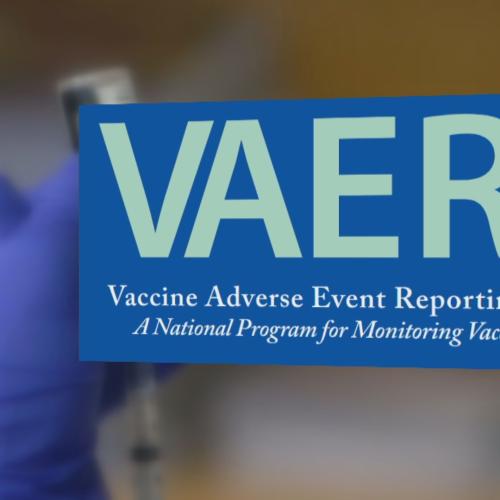
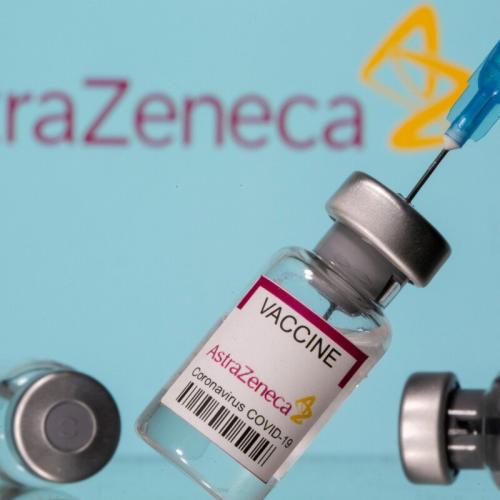
This interim report highlights records the Subcommittee has reviewed regarding HHS’s awareness of and response to cases of myocarditis—a type of heart inflammation—following COVID-19 vaccination. [Some] documents ... have remained hidden from the public and Congress for years. U.S. health officials knew about the risks of myocarditis; Those officials downplayed the health concern; and U.S. health agencies delayed informing the public about the risk of the adverse event. The records [show]: The Israeli Ministry of Health notifying officials at the CDC in late February 2021 of “large reports of myocarditis, particularly in young people, following the administration of the Pfizer vaccine.” Discussions among CDC officials in May 2021 on whether to issue a HAN [Health Alert Network message] on myocarditis, noting that health care professionals across the nation may not be aware of the risk because “providers aren’t reporting these cases to VAERS [Vaccine Adverse Event Reporting System].” A CDC official providing up-to-date information on the status of the HAN to Pfizer Inc. (“Pfizer”) and Moderna, Inc. (“Moderna”) representatives, indicating CDC’s preference to keep the vaccine companies more informed about vaccine adverse events, rather than the American people. Draft meeting notes from late May 2021 exchanged between U.S. public health officials which included the question: “Is VAERS signaling for myopericarditis now?”; and the answer: “For the age groups 16-17 years and 18-24 years, yes.”
Note: Our Substack investigation, The Nuanced View on COVID Vaccine Injuries and Lawsuits, examines how whistleblowers, FDA advisers, and vaccine-injured people exposed irrefutable evidence of COVID vaccine harms, data integrity issues, and failures within the VAERS reporting system. The investigation also explores how Big Tech platforms, pharmaceutical companies, and health organizations engineered the information environment around COVID through censorship and media manipulation.
We Are Bombarding America’s Forests With Roundup
May 1, 2026, Mother Jones
https://www.motherjones.com/politics/2026/04/roundup-glyphosate...
Unbeknownst to most people, logging companies and the US Forest Service have been spraying massive amounts of herbicide in clear-cut and fire-ravaged forests of California—and throughout the nation. And not just any herbicide, but glyphosate, a potent and problematic weed killer best known by the brand name Roundup. My first hint of all this was a single word in a letter the Forest Service sent to me and my neighbors about a year and a half ago. Lassen, it said, was to be part of an ambitious new wildfire recovery project. This was welcome, as the fires had burned perilously close to our properties. Then I came to the word “herbicides.” The Forest Service would, starting in spring 2026, spray glyphosate on some 10,000 acres of public land in Lassen to wipe out leafy plants and shrubs that might compete with replanted conifers. The amount applied annually in state forests—266,000 pounds of pure glyphosate in 2023, the latest year for which data was available—is nearly five times what it was two decades ago. Monsanto orchestrated, financed, and even ghostwrote studies that were published in peer-reviewed scientific journals ... papers that state and federal agencies have relied upon to justify copious spraying of Roundup. The only potential human risk acknowledged in the Forest Service’s [risk] assessment has to do with people unknowingly ingesting glyphosate after foraging for mushrooms and plants in recently sprayed areas.
Note: Our Substack, "The Pesticide Crisis Reveals The Dark Side of Science. We Have The Solutions to Regenerate," uncovers the scope of Bayer/Monsanto's media propaganda machine and the widespread conspiracy to poison our food, air, and along with the powerful remedies and solutions to this crisis. For more along these lines, read our concise summaries of news articles on environmental destruction and toxic chemicals.
In a MAHA win, House passes Farm Bill stripped of language that would have protected pesticide companies
April 30, 2026, The New Lede
https://www.thenewlede.org/2026/04/in-a-maha-win-house-passes-farm...
Federal lawmakers on Thursday passed the House version of the Farm Bill, removing controversial language that would have provided some protections for pesticide companies facing lawsuits over alleged health harms. Members of the US House of Representatives voted 280-142 to pass an amendment to the bill striking sections that would have established “nationwide uniformity for pesticide labeling” effectively preventing states from leveraging labeling requirements aimed at protecting consumers. The provisions were aimed at blocking “failure to warn” claims against pesticide manufacturers like Bayer, which has been sued by more than 100,000 people around the US alleging the company failed to warn that glyphosate herbicides could cause cancer. The amendment ... also eliminates language that would have prevented states and local communities from establishing no-spray zones near schools, as well as a mandate that would have weakened protections from pesticide discharge for waterways. Even with the removal of pesticide preemption language ... the House Farm Bill includes the Ending Agricultural Trade Suppression Act (EATS or Save our Bacon Act), a measure that would prevent state and local governments from “interfering” with interstate commerce by blocking their ability to pass ag policies. These include laws such as California’s Prop 12, which promotes humane treatment of livestock.
Note: Our Substack, "The Pesticide Crisis Reveals The Dark Side of Science. We Have The Solutions to Regenerate," uncovers the scope of Bayer/Monsanto's media propaganda machine and the widespread conspiracy to poison our food, air, and along with the powerful remedies and solutions to this crisis. For more along these lines, read our concise summaries of news articles on factory farming and toxic chemicals.
Modern Ag Alliance is a Bayer lobbying and PR group
April 27, 2026, US Right to Know
https://usrtk.org/pesticides/modern-ag-alliance-is-a-bayer-lobbying-and-pr-group/
The Modern Ag Alliance, launched by Bayer in 2024, enables the company to lobby and campaign through an entity that looks like a coalition of farm organizations, not a single giant chemical corporation. MAA represents itself as a “diverse coalition, founded by Bayer, that today represents more than 110 agricultural organizations.” But public records suggest it functions as a front group for Bayer’s interests. Tax records reveal that a Bayer vice president sits on the board of directors, and nearly all of its budget has gone to a public relations firm that also works for Bayer. Bayer itself describes the MAA as a key part of its lobbying. The company has portrayed the MAA – whose tagline is “Pesticides power America’s ag” – as its strategy for “fighting back” against glyphosate concerns and lawsuits. MAA is a 501(c)(4) nonprofit organization, a structure that allows it to raise unlimited funds for advocacy or lobbying while keeping donors secret. Disclosed members of the Modern Ag Alliance include large agribusiness trade groups, and national and state commodity crop growers’ groups. Many of these groups have financial relationships with Bayer and other pesticide firms, via sponsorships, partnerships or direct funding, though these ties are often opaque. The MAA lobbies for legislation that ... would make it harder for Americans to use state-law failure-to-warn claims to sue pesticide manufacturers for cancer and other injuries.
Note: Our Substack, "The Pesticide Crisis Reveals The Dark Side of Science. We Have The Solutions to Regenerate," uncovers the scope of Bayer/Monsanto's media propaganda machine and the widespread conspiracy to poison our food, air, and along with the powerful remedies and solutions to this crisis. For more along these lines, read our concise summaries of news articles on corporate corruption and toxic chemicals.
Why are young people getting colon cancer? A common weed killer may be linked, scientists say
April 21, 2026, Business Insider
https://www.businessinsider.com/young-colon-cancer-cause-scientists...
A new study suggests a common weed killer may be linked to the mysterious global rise of young colorectal cancer. The first-of-its kind study published Tuesday in the journal Nature Medicine, suggests that picloram — a herbicide used globally to kill woody plants and shrubs while keeping grasses intact — could explain the rising incidence of colon and rectal cancer cases in people under 50. [Senior study author Jose] Seoane's team found that certain "fingerprints" appeared in the DNA of young colorectal cancer tumors they studied, and those fingerprints were linked back to exposures, including: Smoking; Poor diets, lacking fresh vegetables, beans, nuts and other "Mediterranean" staples; Obesity; Educational attainment (which is also linked to poorer diets); and finally, the weed killer picloram. His team checked to see if this same pattern persisted across populations, comparing the incidence of young colorectal cancer in seven US states, including California, Connecticut, Georgia, Iowa, New Mexico, Utah, and Washington, to the level of county-wide pesticide use. The strongest pesticide signal of all tied to higher rates of young colon cancer was for picloram. (In second place was glyphosate.) Picloram, which was developed in the 1960s, was one of many herbicides used in the "agents" the US Military used to clear forest during the Vietnam War. It works by disrupting the way plant hormones normally function, and can persist in the soil for years.
Note: Our Substack, "The Pesticide Crisis Reveals The Dark Side of Science. We Have The Solutions to Regenerate," uncovers the scope of the widespread conspiracy to poison our food, air, and along with the powerful remedies and solutions to this crisis. For more along these lines, read our concise summaries of news articles on health and toxic chemicals.
Pesticide exposure linked to 150% higher cancer risk in major study
April 27, 2026, Science Daily
https://www.sciencedaily.com/releases/2026/04/260426012314.htm
A major new study published in Nature Health has found a strong connection between environmental exposure to agricultural pesticides and an increased risk of cancer. Pesticides are commonly found in food, water, and the surrounding environment, often as complex mixtures rather than single substances. This has made their health effects difficult to measure. Most previous research has focused on individual chemicals in controlled settings, which does not reflect how people are exposed in real life. By combining environmental monitoring, national cancer registry data, and biological research, scientists from the IRD, Institut Pasteur, University of Toulouse, and the National Institute of Neoplastic Diseases (INEN) in Peru provide new insight into how pesticide exposure may contribute to the development of certain cancers. Peru ... includes regions with intensive agriculture, diverse climates and ecosystems, and significant social and geographic inequalities. "We first modeled the dispersion of pesticides in the environment over a six-year period, from 2014 to 2019, which allowed us to create a high-resolution map and identify areas with the highest risk of exposure," explains Jorge Honles, PhD in epidemiology at the University of Toulouse. The team then compared these exposure maps with health data from more than 150,000 cancer patients recorded between 2007 and 2020. Regions with higher environmental pesticide exposure also had higher rates of certain cancers. In these areas, the likelihood of developing cancer was about 150% greater on average. The research also highlights how pesticide exposure may affect the body long before cancer is diagnosed. Molecular studies conducted at the Institut Pasteur, led by Pascal Pineau, show that pesticides can interfere with processes that maintain normal cell function and identity. These disruptions occur early and may accumulate over time without obvious symptoms. Vulnerable populations, including Indigenous and rural communities, may face the greatest risks.
Note: This landmark study demonstrates a significant link between pesticide exposure on a national scale and biological changes that increase the risk of cancer. Our Substack, "The Pesticide Crisis Reveals The Dark Side of Science. We Have The Solutions to Regenerate," uncovers the scope of the widespread conspiracy to poison our food, air, and along with the powerful remedies and solutions to this crisis. For more along these lines, read our concise summaries of news articles on food system corruption and toxic chemicals.
Marine Animals in the Strait of Hormuz Don’t Get a Ceasefire
April 13, 2026, Wired
https://www.wired.com/story/marine-animals-in-the-strait-of-hormuz...
Beneath the surface of the Strait of Hormuz and the surrounding Gulf lies a biological sanctuary. The region is home to around 7,000 dugongs and fewer than 100 Arabian humpback whales—a nonmigratory population that cannot leave these waters. Naval mines, residual military activity, and congested shipping lanes mean the strait remains a high-risk environment—not just for vessels but also for the ecosystems beneath them. Underwater explosions and military sonar don’t just scare whales, they can physically blind them, leading to stranding and death. The Arabian humpback whale, unlike its cousins in the Atlantic, does not migrate. For them, the Gulf is not a corridor but home, a permanent habitat. Olivier Adam, a researcher at Sorbonne University Abu Dhabi, says that the Gulf’s resident cetaceans—better known as marine mammals—have limited options: Either abandon their habitat or remain and endure prolonged exposure to noise. In the case of Arabian humpback whales, relocation is not realistic, as they are one of the only populations that do not migrate between feeding and breeding areas. “These baleen whales have no way to escape,” he says. Whales rely on sound for nearly every essential function: feeding, navigation, reproduction, and social interaction. When that acoustic environment is disrupted, the effects are immediate. In shallow coastal zones, where biodiversity is concentrated, even small disruptions can cascade through the ecosystem.
Note: Read more about the decimation of populations of whales and dolphins over the last decade resulting from the year-round, full-spectrum military practices carried out in the oceans. For more along these lines, read our concise summaries of news articles on war and marine mammals.
Inspiring Articles
Psychology says the single biggest predictor of happiness isn’t income, relationships, or health – it’s the ability to be present in an ordinary moment without wishing it were something else
April 27, 2026, Space Daily
https://spacedaily.com/t-psychology-says-the-single-biggest-predictor...
The single biggest predictor of how happy you are at any given moment isn’t your income, your relationship status, your health, your career, or the city you live in. It’s whether your mind is focused on what you’re doing right now or wandering somewhere else. That’s the whole finding. Present equals happy. Absent equals unhappy. Everything else is details. In 2010, Harvard psychologists Matthew Killingsworth and Daniel Gilbert published a paper in the journal Science with a title that sounds like a Buddhist proverb: “A Wandering Mind Is an Unhappy Mind.” They developed an iPhone app that pinged 2,250 people at random intervals throughout the day, asking three questions: What are you doing? What are you thinking about? How happy are you? People’s minds wandered from what they were doing 46.9 percent of the time. And when their minds wandered, they were consistently less happy than when they were focused on whatever was in front of them. This held true regardless of the activity. What you’re thinking about matters more than twice as much as what you’re doing. You could have the perfect life — the career, the partner, the health, the house — and spend most of it mentally somewhere else, and the somewhere else would make you miserable. We don’t struggle with presence during peak experiences. Nobody’s mind wanders during their wedding or the birth of their child or the moment they land the job they wanted. Those moments are vivid enough to command attention. They handle presence for you. The problem is that peak experiences make up maybe two percent of your life. The other ninety-eight percent ... is ordinary, and your capacity to be present during ordinary moments determines the quality of your entire existence. That’s where happiness actually lives. In the ninety-eight percent. In the ability to be present in an ordinary moment without wishing it were something else.
Note: Explore more positive stories like this in our comprehensive inspiring news articles archive focused on solutions and bridging divides.
Is the key to better aging all in our mind?
March 5, 2026, Scientific American
https://www.scientificamerican.com/article/some-people-really-do-get...
Many older adults also show significant improvements in their physical and cognitive health over time, according to a new study. The reason why seems to lie in how they think about aging. People who viewed getting older positively were more likely to show improvements in their cognitive skills and their walking speed. By contrast, folks in the study who held more negative ideas about aging tended to see a decline in these skills. That suggests people’s beliefs can have a dramatic effect on their biology, the researchers say. “Our findings suggest there is often a reserve capacity for improvement in later life,” said study co-author Becca Levy. “And because age beliefs are modifiable, this opens the door to interventions at both the individual and societal level.” The new study included more than 11,000 adults aged 65 and up. 45 percent of the participants saw a positive development in either their scores on a cognitive test or their walking speed—a critical measure of fitness. Notably, when the researchers averaged the participants’ scores, they saw an expected decline in ability as people aged. But on the individual level, that picture didn’t hold up for everyone. “Many people equate aging with an inevitable and continuous loss of physical and cognitive abilities,” Levy said. “What we found is that improvement in later life is not rare, it’s common, and it should be included in our understanding of the aging process.”
Note: Explore more positive stories like this on amazing seniors.
How Art Is Making People Healthier
March 30, 2026, Reasons to be Cheerful
https://reasonstobecheerful.world/art-for-health/
When Jamie Schuler teaches her Friday dance classes, some of her students stay seated. Most of the up to two dozen dancers have Parkinson’s disease or other conditions that impact their mobility. A mashup of physical therapy and artistic expression developed by New York’s Mark Morris Dance Group, Schuler’s classes are designed to help participants manage aspects of their diseases, like coordination, balance and gait, while declaring dance an art form for everyone. Some of the dancers have even joined 3rd Law, the company that puts on the classes, in live, on-stage professional performances. Community-based workshops like this reflect a growing body of scholarship linking the arts to improved outcomes in physical and mental health. The research is fueling a push to make arts more accessible ... while hospitals, therapists and clinical researchers are increasingly bringing art and culture into environs for healing. Today, about half of U.S. hospitals have some kind of arts program. But UF Health has uniquely interwoven its arts program with its medical practice. Through the hospital’s chart system, doctors and nurses make referrals to UF Health Shands Arts in Medicine, which includes a roster of in-house artists. In 2025, practitioners with the program had 13,000 arts engagements with the health system’s patients, ranging from dance classes for expecting mothers in high-risk pregnancies, to painting or making mosaics with young patients.
Note: Explore more positive stories like this on inspiring disabled persons and the power of art.
Want Safer Streets? Cover Them in Art
August 22, 2022, Reasons to be Cheerful
https://reasonstobecheerful.world/safer-streets-painted-intersections-crosswalk-art/
Crosswalks don’t work. According to various studies, only between five and fifteen percent of drivers slow down at pedestrian crossings. The vast majority of drivers simply don’t pay attention to them. America’s deadly streetscape is the subject of The Street Project, a new PBS documentary about citizen-led efforts to make streets safer. When filmmaker Jennifer Boyd started making it, she assumed distracted driving must be behind the alarming rise in pedestrian deaths. But as she soon learned, digital screens are less of a culprit than most people realize. “Less than one percent of pedestrian deaths involved portable electronic devices,” she found. Instead, she discovered that two of the biggest factors are speeding and bigger cars. If speeding and visibility are the problem and crosswalks can’t stop it, color might. The Asphalt Art Initiative, a program funded by Bloomberg Philanthropies, provides grants to create art to modify dangerous streets. One of these projects is in Chattanooga, Tennessee, where artists and residents transformed a high-traffic commercial thoroughfare with a block-long asphalt mural, while students marked safe walking paths in the area with stencils and wheat paste. Overall, according to the Initiative, “the data showed a 50 percent drop in crashes involving pedestrians or cyclists and a 37 percent drop in crashes leading to injuries. Intersections with asphalt art saw a 17 percent reduction in total accidents.”
Note: Don't miss the great pictures and video of public art available at the link above. Explore a treasure trove of concise summaries of incredibly inspiring news articles which will inspire you to make a difference.
As a 501(c)(3) nonprofit, we depend almost entirely on donations from people like you.
Your financial support makes a difference.
Donate here.
Our site serves as a research tool and comprehensive archive for educating the public on deep government and corporate corruption. We offer whistleblower reports, declassified government documents, online books and videos, and educational courses on important topics avoided by the mainstream.
- Explore our Youtube and Substack for our latest videos and original investigations.
- Explore our comprehensive news index on a wide variety of topics.
- Explore our Information Centers.
- Explore the top 20 most revealing news media articles we've summarized.
- Check out 10 useful approaches for making sense of the media landscape.
- Share the work of WantToKnow.info with your friends and colleagues.
Finding Balance: WantToKnow.info Inspiration Center
Our Inspiration Center seeks to catalyze new connections and meaningful community action for systemic change. We've summarized over 3,000 inspiring news articles since the beginning of our organization in 2003, focusing on solutions, bridging divides, and unique human stories.
www.momentoflove.org - Every person in the world has a heart
www.personalgrowthcourses.net - Dynamic online courses powerfully expand your horizons
www.WantToKnow.info - Reliable, verifiable information on major cover-ups
www.weboflove.org - Strengthening the Web of Love that interconnects us all
Subscribe here to the WantToKnow.info email list (two messages a week)