
















News Articles
Below are key excerpts of revealing news articles from reliable news media sources. If any link fails to function, a paywall blocks full access, or the article is no longer available, try these digital tools.
For further exploration, delve into our comprehensive Information Centers.

Woody Norris aims the silvery plate ... demonstrating something called HyperSonic Sound (HSS). I pace out a hundred yards. Norris pelts me with the Handel. The sound is inside my head. Imagine, he says, walking by a soda machine (say, one of the five million in Japan that will soon employ HSS) ... then hearing what you alone hear -- the plink of ice cubes and the invocation, ''Wouldn't a Coke taste great right about now?'' An HSS transmission can travel 450 feet - at practically the same volume all along its path. In past months, Norris and his staff have made a further, key improvement to HSS -- instead of sending out a column of sound, they can now project a single sphere of it, self-contained, like a bubble. [And] there are Defense Department applications. Norris [has] been busy honing something called High Intensity Directed Acoustics (HIDA). Although [it] has been routinely referred to as a "nonlethal weapon," ... in reality, HIDA is both warning and weapon. If used from a battleship, it can ward off stray crafts at 500 yards with a pinpointed verbal warning. Should the offending vessel continue ... the stern warnings are replaced by 120-decibel sounds that are as physically disabling as shrapnel. Certain noises, projected at the right pitch, can incapacitate even a stone-deaf terrorist; the bones in your head are brutalized by a tone's full effect whether you're clutching the sides of your skull in agony or not. "HIDA can instantaneously cause loss of equilibrium, vomiting, migraines - really, we can pretty much pick our ailment," he says brightly. Last month, [Norris' company] A.T.C. cut a five-year, multimillion-dollar licensing agreement with General Dynamics, one of the giants of the military-industrial complex.
Note: This entire article is well worth reading if you want to understand just how advanced these dangerous weapons are. And there is little doubt that this weapon can cause death. Remember the article was written in 2003. Sound weapons developed for war are now routinely used against civilian populations. Explore an excellent, well researched article going into more detail on these weapons. For more along these lines, see concise summaries of deeply revealing non-lethal weapons news articles from reliable major media sources.
The Carlyle Group [is] an investment house famous as one of the most well-connected companies anywhere. Former president George H.W. Bush is a Carlyle adviser. Former British prime minister John Major heads its European arm. Former secretary of state James Baker is senior counselor, former White House budget chief Richard Darman is a partner, former SEC chairman Arthur Levitt is senior adviser -- the list goes on. Those associations have brought Carlyle enormous success. The Washington-based merchant bank controls nearly $14 billion in investments, making it the largest private equity manager in the world. It buys and sells whole companies the way some firms trade shares of stock. But the connections also have cost Carlyle. It has developed a reputation as the CIA of the business world -- omnipresent, powerful, a little sinister. Media outlets from the Village Voice to BusinessWeek have depicted Carlyle as manipulating the levers of government from shadowy back rooms. Congresswoman Cynthia McKinney (D-Ga.) even suggested that Carlyle's and Bush's ties to the Middle East made them somehow complicitous in the Sept. 11 terror attacks. It didn't help that as the World Trade Center burned on Sept. 11, 2001, the news interrupted a Carlyle business conference at the Ritz-Carlton Hotel here attended by a brother of Osama bin Laden. Former president Bush, a fellow investor, had been with him at the conference the previous day. Bush['s] primary function is to give speeches for Carlyle that attract wealthy foreigners in places where the former president is especially revered, such as Asia. The company has rewarded its faithful with a 36 percent average annual rate of return.
Note: If the above link fails, click here. To understand the amazingly powerful role of this low-profile, yet extremely wealthy and influential group, click here to view free a 48-minute documentary shown on Dutch national TV which clearly depicts the depths of corruption and deceit at the highest levels of government. You will be thankful that you watched this highly educational film.
As troops and equipment pour into the Gulf for a looming war with Iraq, United States military thinkers admit that "defence" means protecting ... cheap oil. As far back as 1975, Henry Kissinger, then secretary of state, said America was prepared to wage war over oil. Separate plans advocating US conquest of Saudi oilfields were published in the '70s. So it should come as little surprise that ... four months before the terrorist attacks on Washington and New York - a battle plan for Afghanistan was already being reviewed by the US Command that would carry it out after September 11. Military strategists were highlighting the energy wealth of the Caspian Sea and Central Asia and its importance to America's "security". The Indian media and Jane's Intelligence Review reported that the US was fighting covert battles against the Taliban, months before the "war on terrorism" was declared. Over several months beginning in April last year a series of military and governmental policy documents was released that sought to legitimise the use of US military force in the pursuit of oil and gas. A spring 2001 article by Jeffrey Record in the War College's journal, Parameters, argued the legitimacy of "shooting in the Persian Gulf on behalf of lower gas prices". Mr Record [is] a former staff member of the Senate armed services committee (and an apparent favourite of the Council on Foreign Relations). [He] advocated the acceptability of presidential subterfuge in the promotion of a conflict. Mr Record explicitly urged painting over the US's actual reasons for warfare with a nobly high-minded veneer, seeing such as a necessity for mobilising public support for a conflict.
Note: This highly revealing report on the military planning of wars for oil is well worth reading in its entirety, at the link above. For lots more on major deception and manipulation around the event of 9/11, click here.
Over the past three years, more than 60 institutions, including several of the world's most prestigious research centers, have been criticized by the U.S. government for failing to protect human subjects adequately. As recently as 1974 individual scientists and their financial backers could decide for themselves what constituted ethical research. Most of the time their judgment was sound, but there were plenty of appalling exceptions. In the 1950s Army doctors gave LSD to soldiers without telling them what it was. In 1963 researchers injected prisoners and terminally ill patients with live cancer cells to test their immune responses; they were told only that it was a "skin test." In the 1950s mentally retarded children at Willowbrook, a state institution in New York, were deliberately infected with hepatitis so that scientists could work on an experimental vaccine. And in perhaps the most infamous case on record, doctors at Georgia's Tuskegee Institute, starting in the 1930s, deliberately withheld treatment from syphilis-infected African-American men for 40 years to monitor the course of the disease. Financial conflicts of interest can extend not only to the institutions but also to the researchers themselves. Jesse Gelsinger's death in the University of Pennsylvania's gene-therapy trial in 1999 seemed especially scandalous [because] James Wilson, the principal investigator in the study, held a 30% equity stake in Genovo, which owned the rights to license the drug Wilson was studying; the university owned 3.2% of the company. When Targeted Genetics Corp. acquired Genovo, Wilson reportedly earned $13.5 million and Penn $1.4 million.
Note: For a powerful, reliable list of astounding incidents in which government and medical professionals used humans as guinea pigs over the past hundred years and continuing to the present, click here. Links are provided to reliable sources for verification. For key facts on government mind control programs, click here.
Outside this country, there is a widespread belief that U.S. military deployments in Central Asia mostly are about oil. An article in the Guardian of London headlined, "A pro-western regime in Kabul should give the U.S. an Afghan route for Caspian oil," foreshadowed the kind of skeptical coverage the U.S. war now receives in many countries. Author George Monbiot ... wrote that the U.S. oil company Unocal Corp. had been negotiating with the Taliban since 1995 to build "oil and gas pipelines from Turkmenistan, through Afghanistan and into Pakistani ports on the Arabian sea." Unocal pulled out of the deal after the 1998 terrorist attacks on U.S. embassies in Kenya and Tanzania were linked to terrorists based in Afghanistan. The terrorist acts of Sept. 11, though tragic, provided the Bush administration a [pretext] to invade Afghanistan, oust the recalcitrant Taliban and, coincidentally, smooth the way for the pipeline. To make things even smoother, the U.S. engineered the rise to power of two former Unocal employees: Hamid Karzai, the new interim president of Afghanistan, and Zalmay Khalizad, the Bush administration's Afghanistan envoy. [Uri] Averny, a former member of the Israeli Knesset ... argues that the war on terrorism provides a perfect pretext for America's imperial interests. "If one looks at the map of the big American bases created for the war, one is struck by the fact that they are completely identical to the route of the projected oil pipeline to the Indian Ocean." No wonder the rest of the world is a bit skeptical about our war on evildoers.
Note: Why do so few people know that these two top officials of Afghanistan were once paid by an American oil company? For important reports from major media sources on the realities of the "war on terror," click here.
A monkey virus found in early versions of a vaccine against polio may be linked to a common type of cancer, suggest scientists. Batches of polio vaccine tainted with "simian virus 40" (SV40) were given between 1955 and 1963. This was because monkey kidney cells were used in the [vaccine's] production process. It is [now] conceded that SV40 was present in the early vaccine - and the latest research, published in the Lancet journal, has linked it to non-Hodgkin's lymphoma. This is a cancer of the lymphatic system, which has a role in the body's fight against infection, and affects mainly the over 40s. The researchers looked at hundreds of tumours taken from various cancer patients, and compared them with 68 samples taken from non-Hodgkin's patients. They found genetic "footprints" of the virus in 43% of the non-Hodgkin's tumour cells.
Note: This information was uncovered years ago by Merck's top vaccine expert, Maurice Hilleman, who acknowledged that he unintentionally imported the AIDS virus to the US. See the shocking video of his testimony available here (text here). For lots of reliable information raising serious questions about the dangers of vaccines, click here and here.
Almost lost in the chaos of the collapse of the World Trade Center is a mystery that under normal circumstances would probably have captured the attention of the city and the world. That mystery is the collapse of a nearby 47-story, two-million-square-foot building. Engineers and other experts ... were for weeks still stunned by what had happened to 7 World Trade Center. [They] struggle to explain the collapse. That building had housed, among other things, the mayor's emergency command bunker. It tumbled to its knees shortly after 5:20 on the ugly evening of Sept. 11. Experts said no building like it, a modern, steel-reinforced high-rise, had ever collapsed because of an uncontrolled fire, and engineers have been trying to figure out exactly what happened and whether they should be worried about other buildings like it around the country. "Even though Building 7 didn't get much attention in the media immediately, within the structural engineering community, it's considered to be much more important to understand," said William F. Baker, a partner in charge of structural engineering at the architectural firm Skidmore, Owings & Merrill. "They say, 'We know what happened at 1 and 2, but why did 7 come down?'" Jonathan Barnett, a professor of fire protection engineering at the Worcester Polytechnic Institute, said a definitive answer to the question of what happened in 7 World Trade Center is perhaps the most important question facing investigators. "It's just like when you investigate a plane crash. If we find a weakness in the building or a deficiency in the building that causes that collapse, we then want to find that weakness in other buildings and fix it."
Note: Though this articles blames the collapse on a diesel fuel fire, over 3,000 architects and engineers say this is impossible. A New York Times article states that some of the I-beams at WTC 7, "once five-eighths of an inch thick, had vaporized." Powerful evidence presented by experts suggests that World Trade Center 7 was brought down by explosives. And don't miss the PBS special, "9/11 Explosive Evidence: Experts Speak Out", in which 40 whistle-blowing architects and engineers present astounding evidence of controlled demolition at World Trade Center 7.
Could the [9/11] bombers have been stopped? NEWSWEEK has learned that while U.S. intelligence received no specific warning, the state of alert had been high during the past two weeks, and a particularly urgent warning may have been received the night before the [9/11] attacks, causing some top Pentagon brass to cancel a trip. Why that same information was not available to the 266 people who died aboard the four hijacked commercial aircraft may become a hot topic on the Hill.
Note: This most astounding information is buried in this long article. Yet it is repeated in a Newsweek article 11 days later (9/24/2001), which states, "On Sept. 10, NEWSWEEK has learned, a group of top Pentagon officials suddenly canceled travel plans for the next morning, apparently because of security concerns." It was again buried in a longer article, yet the author felt it important enough to include. Why was there no follow up? WantToKnow.info's Fred Burks has a reliable deep cover CIA contact who says he was informed just hours before the attacks that there was going to be a major attack on Washington on 9/11. For an abundance of reliable verifiable information suggesting a major cover-up around 9/11, click here and here.
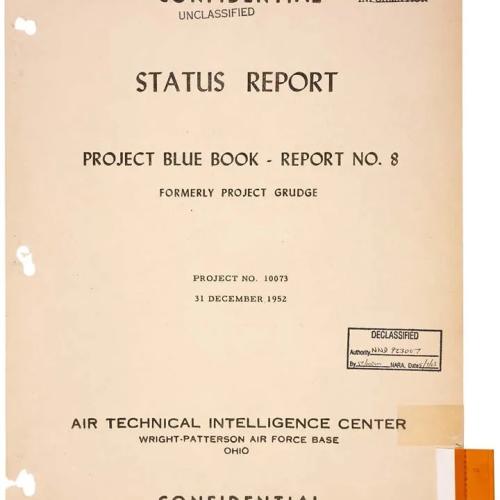
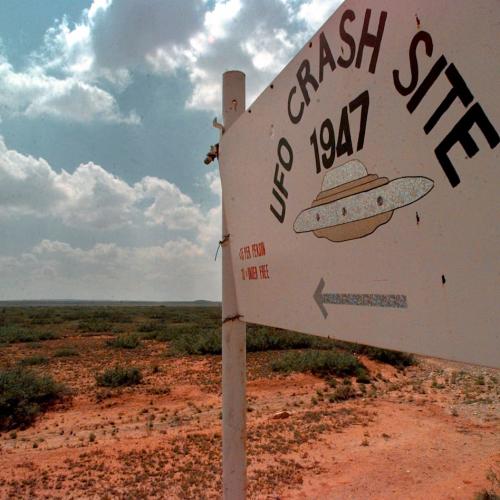
A group of about 20 former government workers, many of them military and security officials ... stepped forward on Wednesday to say they had witnessed evidence of aliens and unidentified flying objects and called for congressional hearings about such sightings. "These testimonies establish once and for all that we are not alone," said Steven Greer, director of the Disclosure Project, a nonprofit research organization dedicated to disclosing alleged alien sightings. Greer, who organized the program at the National Press Club in Washington, argued that the United States and other governments have known about UFOs for at least 50 years and have been keeping the information secret. Greer said there were some 400 witnesses who claim to have firsthand experience with UFO sightings or alien evidence, and are willing to testify before Congress. Among them is Daniel Sheehan, a well-known Washington lawyer who is acting as counsel for members of Greer's group. Sheehan told reporters that during the Carter administration he found out about government-held UFO information that then-CIA Director George Bush, father of the current president, would not release. Sheehan said he was then led into the National Archives, where he was shown photographs of captured UFOs, complete with what appeared to be alien writing symbols. Former Air Force Maj. George Filer III told reporters that when he was at McGuire Air Force Base in New Jersey, an alien craft came down, and an alien got out and was shot by a military policeman. "Our security police went out there and found him at the end of the runway dead," Filer said.
Note: To watch a video of this most intriguing program, click here. An MD and former hospital ER director, Dr. Steven Greer has videotaped interviews with over 100 military and government witnesses who had personal experiences with the UFO cover-up. For lots more reliable, verifiable information on this intriguing topic, click here.
Just weeks after he entered the Texas prison system at age 19, Kerry Max Cook says he was gang-raped by fellow inmates. It was the beginning of what he describes as two decades of torture. More than 200,000 men are raped behind bars each year, according to the group Stop Prisoner Rape. While rape under any circumstances is a violation, human rights advocates say rape in prison is also torture. Cook, 46, now released from prison, says the first attack came not long after he ended up behind bars. "They made me take my clothes off," says Cook. "They bent me over a concrete embankment that used to sit outside in the yard." Before it was over, the inmates had carved obscenities into Cook's backside. Over the next two years, he says, he was repeatedly assaulted and even locked up with his attackers. The American prison system has been described as a "sexual jungle," where there are predators and prey. Experts say some prison officials quietly permit rape as a way to control the population. "Where the predators — the more violent, powerful inmates — are in effect being given a bribe or a reward to cooperate with the prison authorities," says Harvard University criminologist Dr. James Gilligan. "As long as they cooperate, the prison authorities will permit them to have their victims." This may be why inmates such as Matthew Rolen say their cries of rape are simply ignored by prison officials. "They told me flat out: we don't care," says Rolen, 36, who is thin and nonviolent, which makes him a target. Rolen says he filed a series of complaints to Texas prison officials. They didn't intervene, he says, until an attacker beat him unconscious in a crowded dayroom.
Note: To understand how disturbing and common sexual abuse in prison is, read this 2001 Human Rights Watch report that documents dozens of first-hand accounts of rape and sexual slavery in prison systems across 34 states.
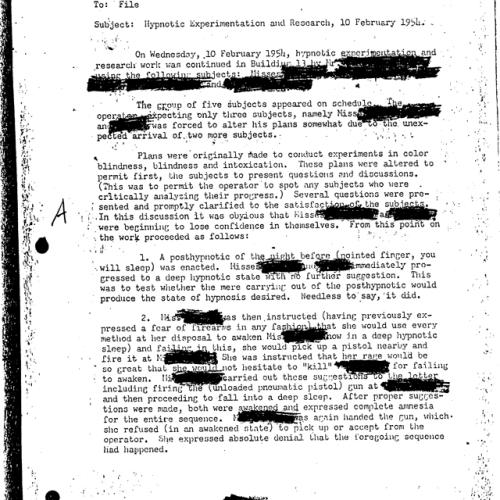
Sidney Gottlieb, who presided over the Central Intelligence Agency's cold-war efforts to control the human mind and provided the agency poisons to kill Fidel Castro, died on Sunday. He ... spent his later years caring for dying patients ... and fighting lawsuits from survivors of his secret tests. He will always be remembered as the Government chemist who dosed Americans with psychedelics in the name of national security. Mr. Gottlieb joined the C.I.A. in 1951. Two years later, the agency established MKUltra and Mr. Gottlieb was running it. He served two decades as the senior scientist presiding over some of the C.I.A.'s darkest secrets. The first of these were the LSD experiments. Mr. Gottlieb was fascinated by the drug [and] took it hundreds of times. In the 1950's and early 1960's, the agency gave mind-altering drugs to hundreds of unsuspecting Americans in an effort to explore the possibilities of controlling human consciousness. In one case, a mental patient in Kentucky was dosed with LSD continuously for 174 days. Other experiments involved agency employees, military officers and college students. In all, the agency conducted 149 separate mind-control experiments, and as many as 25 involved unwitting subjects. At least one participant died, others went mad, and still others suffered psychological damage after participating in the project, known as MK Ultra. The C.I.A. ... deliberately destroyed most of the MKUltra records in 1973. Mr. Gottlieb was also involved in the C.I.A.'s assassination plots. [He] developed a poison handkerchief to kill an Iraqi colonel, an array of toxic gifts to be delivered to Fidel Castro, and a poison dart to kill a leftist leader in the Congo.
Note: Read more about the CIA'sMK-ULTRA program. For more along these lines, see concise summaries of deeply revealingnews articles on mind controlfrom reliable major media sources. Then explore the excellent, reliable resources provided in ourMind Control Information Center.
A homosexual prostitution ring is under investigation by federal and District authorities and includes among its clients key officials of the Reagan and Bush administrations, military officers, congressional aides and US and foreign businessmen with close social ties to Washington's political elite. Reporters for this newspaper examined hundreds of credit-card vouchers, drawn on both corporate and personal cards and made payable to the escort service operated by the homosexual ring. Among clients who charged homosexual prostitutes services on major credit cards over the past 18 months are Charles K. Dutcher, former associate director of presidential personnel in the Reagan administration, and Paul R. Balach, Labor Secretary Elizabeth Doles political personnel liaison to the White House. Members of major news organizations also procured escort services from the ring, credit card documents show. These include Stanley Mark Tapscott, who was an assistant managing editor of The Washington Times. Before joining The Times, Mr. Tapscott worked for the Office of Personnel Management in the Reagan administration. A major concern, said the former official with longtime ties to top-ranking military intelligence officers, was that hostile foreign intelligence services were using young male prostitutes to compromise top administration homosexuals, thus making them subject to blackmail.
Note: How is it possible that this major story was not covered by any major media other than the Washington Times? For answers to this question, click here. For more on this astonishing case, don't miss the excellent, reliable resources and the powerful, suppressed Discovery Channel documentary available here. For an insider's story of how prostitution was regularly used to compromise politicians, click here.
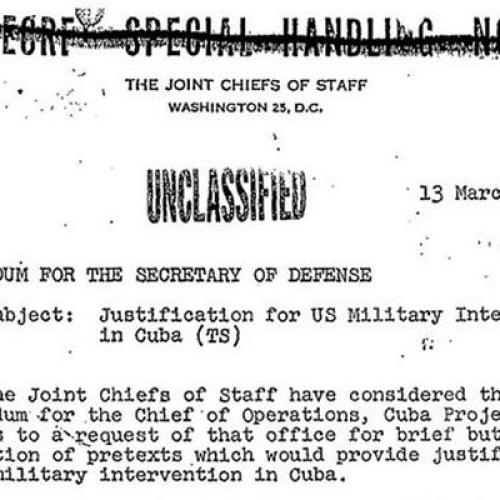
It may be difficult for Americans to comprehend the frame of mind of the men who ... started the Central Intelligence Agency's effort to manipulate human behavior. The C.I.A. leaders were certain the Communists had embarked on a campaign to control men's minds and they were determined to find a defense, setting out in earnest the next year1950with Project Bluebird, which evolved into Project Artichoke, then became MK-ULTRA - MK-DELTA. With each code name change, they broadened their sweep, until there remained virtually no avenue of human behavior control they were not exploring. There was an "urgent need," the C.I.A. and other intelligence agencies argued, to develop "effective and practical techniques" to "render an individual subservient to an imposed will or control." The C.I.A. men ... acknowledged among themselves that much of what they were setting out to do was "unethical," bordered on the illegal and would be repugnant to the American people. "Precautions must be taken," one agency official wrote in an internal memo, "not only to protect the operation from exposure to enemy forces, but also to conceal these activities from the American public in general." They wanted to be able to get away with murder without leaving a trace. In attempts to develop ways to administer lethal and mind-altering drugs surreptitiously through clothing as thick as a leather jacket, they tried out small spray guns and pencil-like injectors. They studied the writing of the psychologist who worked with Adolf Hitler, wondered about the use of the "occult" and of "black psychiatry."
Note: To see a free copy of this highly revealing New York Times article, click here. For lots more reliable, verifiable information suggesting a major cover-up of government mind control programs, click here.
For seven generations, one European family has dominated an incredible part of all that money can buy. From its London and Paris banks, the family's millions have been sent forth to ... business enterprises on six continents. Some of its stately dwellings are the kind of mansions that mere San Simeons hoped to imitate. This ancient and unusual banking dynasty shields itself from the curious eye of the public, but the map and history of Europe have been changed by its action and etched with its name: the House of Rothschild. Seldom unimaginative in the use of their money, Rothschild gold has powered the ambitions of prime ministers, princes and popes. It has financed wars and reparations treaties, changed the course of politics and bailed out armies and nations. The Rothschilds strung railroads across the Continent, gained control of the Suez Canal [and] carved diamond mines in the African veld. The British Rothschilds [are still] the world's most important bullion dealers. No modern family ... has been so important for so long in European business. Newer dynasties such as the Rockefellers and the Fords have made more millions, but ... ledgers cannot reflect the Rothschild lands, their possessions and influence accumulated over the generations, their priceless collections of art. Today, the legend is very much alive and being added to. The Rothschilds are striking out in many new directions behind a silver curtain of discretion. Rather than run companies by themselves, the Rothschilds often prefer to start or join syndicates, placing their men on boards to exert maximum influence with minimum investment risk. [They rely on] a far spreading network of agents, who seldom even admit that they are employed by the Rothschilds.
Note: To read the full, fascinating article, click here. The major media have very rarely exposed the power and wealth of the Rothschilds as in this article. Note that the article was written less than a month after the assassination of John F. Kennedy. Could it be because of some anger at the elite who killed Kennedy that this highly revealing article was actually published? For more on secret societies which command huge hidden power, see the deeply revealing reports from reliable major media sources available here.
Suicide rates for active-duty service members and veterans are rising, in part, experts say, because a culture of toughness and self-sufficiency may discourage service members in distress from getting the assistance they need. In some cases, the military services discharge those who seek help, an even worse outcome. More than 45,000 veterans and active-duty service members have killed themselves in the past six years. That is more than 20 deaths a day in other words, more suicides each year than the total American military deaths in Afghanistan and Iraq. The latest Pentagon figures show the suicide rate for active-duty troops across all service branches rose by over a third in five years, to 24.8 per 100,000 active-duty members in 2018. Those most at risk have been enlisted men under 30. The data for veterans is also alarming. In 2016, veterans were one and a half times more likely to kill themselves than people who hadnt served in the military, according to the House Committee on Oversight and Reform. Among those ages 18 to 34, the rate went up nearly 80 percent from 2005 to 2016. The risk nearly doubles in the first year after a veteran leaves active duty, experts say. The Pentagon this year also reported on military families, estimating that in 2017 there were 186 suicide deaths among military spouses and dependents. Military officials note that the suicide rates for service members and veterans are comparable to the general population after adjusting for the militarys demographics predominantly young and male.
Note: For more along these lines, see concise summaries of deeply revealing news articles on military corruption and health from reliable major media sources.
Those with the gold make the rules. In an investigative series [the Miami Herald] documents the whitewash of an alleged global conspiracy to traffic underage girls for sexual exploitation. Though [the Herald] identified more than 80 likely victims, [Jeffrey Epstein] was allowed – under a furtive plea deal – to serve just 13 months in country-club conditions. Epstein, a fantastically wealthy creep, ran afoul of the Palm Beach police in 2005 after the parents of a 14-year-old girl reported that he paid their daughter to strip and massage his naked body while he pleasured himself. Investigators soon found evidence ... indicating that troubled girls by the dozens were recruited for molestation and rape. Epstein’s wealth – the origins of which are a bit murky – assembled an all-star team of defense lawyers, including Alan Dershowitz, the Harvard scholar. Left unresolved is whether Epstein’s extensive array of powerful friends may have helped him out, too. In the same “little black book” where he kept the names of underage girls around the world available for “massage,” Epstein also had contact information for Donald Trump, Bill Clinton, Michael R. Bloomberg, Prince Andrew, assorted Kennedys and so on. Some of Epstein’s accusers [have been silenced]. Silent, too, is Trump, who once claimed a 15-year acquaintance with Epstein, whom he described as “a lot of fun.” Trump noted Epstein’s interest in women “on the younger side.” And Clinton is uncharacteristically mute, though he used to spend so much time on Epstein’s private jet – dubbed “the Lolita Express” – that, if it were an airline, he’d have platinum status. Two of our past four presidents have been chummy with a registered sex offender. It makes you wonder.
Note: Read a great interview with Julie Brown, the intrepid reporter who broke the Epstein case. For more along these lines, see concise summaries of deeply revealing news articles on Jeffrey Epstein from reliable major media sources. And watch an excellent segment by Australia's "60-Minutes" team "Spies, Lords and Predators" on a pedophile ring in the UK which leads directly to the highest levels of government. A second suppressed documentary, "Conspiracy of Silence," goes even deeper into this topic in the US.
It's flu-shot season, and public health officials are urging everyone over 6 months of age to get one. For vaccine manufacturers, it's a bonanza: Influenza shots ... are a multibillion-dollar global business. But how good are they? Last month, in a step tantamount to heresy in the public health world, scientists at the Center for Infectious Disease Research and Policy at the University of Minnesota released a report saying that influenza vaccinations provide only modest protection for healthy young and middle-age adults, and little if any protection for those 65 and older. Moreover, the report's authors concluded, federal vaccination recommendations ... are based on inadequate evidence and poorly executed studies. Michael T. Osterholm, director of the Center for Infectious Disease Research and Policy [stated,] "It does not protect as promoted. It's all a sales job: it's all public relations." While researching the report ... the authors discovered a recurring error in influenza vaccine studies that led to an exaggeration of the vaccine's effectiveness. They also discovered 30 inaccuracies in the statement on influenza vaccines put forth by the expert panel that develops vaccine recommendations, all of which favor the vaccine. The new report from the Center for Infectious Disease Research and Policy is not the first to point out the shortcomings of influenza vaccines, however. The Cochrane Collaboration, an international network of experts that evaluates medical research, concluded in a 2010 review that the vaccines ... have minimal impact in seasons when vaccines and viruses are mismatched.
Note: A 2020 study on the annual flu vaccine in the Annals of Internal Medicine concluded that "no evidence indicated that vaccination reduced hospitalizations or mortality among elderly persons." For more along these lines, see concise summaries of deeply revealing news articles on vaccines from reliable major media sources.
Every five years, top officials of the Food and Drug Administration go behind closed doors to negotiate the terms of its core budget – about $3 billion this year. But the F.D.A. is not at the table with members of Congress or with White House officials. Instead, it's in dozens of meetings with representatives of the giant pharmaceutical companies whose products the agency regulates. The negotiations are a piece of the "user fee" program in which drug, device and biotech companies make payments to the agency partly to seek product approvals. The fees ... make up nearly half of the F.D.A.'s budget, financing 6,500 jobs at the agency. The pharmaceutical industry funding alone has become so dominant that last year it accounted for three-quarters – or $1.1 billion – of the agency's drug division budget. Advocates for patients and doctors say the agreements have enabled the industry to weaken the approval process meant to ensure that drugs are safe and effective. "It's kind of like a devil's bargain," said Dr. Joseph Ross, a professor at the Yale School of Medicine who has studied F.D.A. policies, "that I think is not in the best interest of the agency, because it turns this every-five-year cycle into the F.D.A. essentially asking industry, 'What can we do to secure this money?'" Senator Bernie Sanders ... suggested that the pharmaceutical companies' tendency to charge "outrageous" prices was related to their significant role in funding and advancing policy goals of the F.D.A.'s drug division.
Note: A revealing interview of a top cardiologist illuminates the history of how Big Pharma has corrupted science and greatly damaged public health. For more along these lines, see concise summaries of news articles on big Pharma corruption from reliable major media sources.
Multimillionaire Jeffrey Epstein is a free man, despite sexually abusing dozens of underage girls according to police and prosecutors. [In 2008, Epstein] received what might have been the most lenient plea deal for a serial sex offender in U.S. history. The Miami Herald identified over 60 of his victims, just young middle and high school girls at the time of the abuse. They were betrayed by the very prosecutors who were supposed to hold Epstein accountable. One child would be lured over. [She] would be offered the further inducement of being paid a bounty for anybody else that she was able to bring to [him]. Epstein ... was also suspected of organizing sex activities with underage girls at his homes in New York City, New Mexico and on his private island in the Caribbean. Hundreds of children all over the world ... were alleged sex slaves of Jeffrey Epstein. Flight logs from his plane and his address book read like a Whos Who of some of the richest and most famous and powerful people in the worldcelebrities, actors, philanthropists, academics and world leaders. There was ample physical evidence and witness testimony. [Yet] State Attorney Barry Krischer wanted to charge Epstein only with a misdemeanor. The U.S. Attorneys Office got involved, [yet Epstein's] attorneys were able to manipulate the sitting U.S. attorney and the assistant U.S. attorney working the cases. The U.S. attorneys here had an indictment, and they were sending it back and forth to Jeffreys lawyers for changes. This is a situation where ... the defendant and the government are working together against the victims.
Note: Don't miss the revealing video of all this at the link above. Then read a great interview with Julie Brown, the intrepid reporter who broke this case. Learn about other major cover-ups in high places in deeply revealing news articles on sexual abuse scandals from reliable major media sources. Watch an excellent segment by Australia's "60-Minutes" team "Spies, Lords and Predators" on a pedophile ring in the UK which leads directly to the highest levels of government. A second suppressed documentary, "Conspiracy of Silence," goes even deeper into this topic in the US.
More than 2,400 U.S. doctors have been sanctioned for sexually abusing their patients, according to a new report that, for the first time, surveyed records from all 50 states and reveals the nationwide scope of a problem that may be almost as far-reaching as the scandal involving Catholic priests. State medical boards, which oversee physicians, allowed more than half the sanctioned doctors to keep their licenses even after the accusations of sexual abuse were determined to be true, according to a yearlong investigation by The Atlanta Journal-Constitution. We found a culture of secrecy, said Carrie Teegardin, a reporter on the papers investigative team. Even after being convicted of sex crimes and losing their licenses, doctors are often able to reapply to practice again. The Journal-Constitution investigation began with a story about one Georgia doctor that led to efforts to document the problem nationwide. By combing through news reports, state medical board records and court files going back 16 years, the Journal-Constitution's reporters compiled a list of physicians who were either convicted in criminal cases or disciplined by state medical boards. Many of the doctors were accused by large numbers of their patients, in most cases females being seen by male doctors. One thing we found that was shocking to us is some of these doctors are the most prolific sex offenders in the country, with hundreds and, in some cases, thousands of victims, Teegardin said.
Note: For more on this, see this excellent article from Atlanta's leading newspaper. For more along these lines, see concise summaries of deeply revealing sexual abuse scandal news articles from reliable major media sources.
Important Note: Explore our full index to revealing excerpts of key major media news articles on several dozen engaging topics. And don't miss amazing excerpts from 20 of the most revealing news articles ever published.